


July 13 in History: The First World Cup, Marat’s Assassination and Live Aid Concerts
The date includes milestones from the first FIFA World Cup in 1930 to Live Aid in 1985, alongside major political, cultural and historical events.
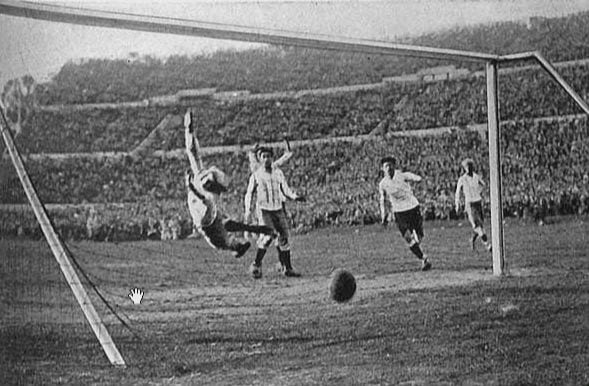
On July 13, 1930, the first FIFA World Cup began in Uruguay, marking a turning point in the history of sport and global culture. Organized at a time when international travel was slow, expensive, and difficult, the tournament brought together national teams for a new kind of worldwide competition. It mattered then because it gave countries a peaceful stage on which to compete and build national pride. It still matters today because the World Cup became one of the most widely followed events on earth, shaping the global reach of football and showing how sport can connect people across borders.
Get The Latest News!
Don't miss our top stories and need-to-know news everyday in your inbox.
The opening matches took place in Montevideo, with France defeating Mexico and the United States beating Belgium. Only 13 teams entered that first tournament, and most came from the Americas because many European nations were unwilling or unable to make the long sea journey. Even so, the event proved that an international championship outside the Olympic Games could succeed. In the decades that followed, the World Cup grew into a major institution, influencing media, business, diplomacy, and popular culture far beyond the field.
On July 13, 1573, the Siege of Haarlem ended during the Eighty Years’ War. Spanish forces captured the Dutch city after a long and bitter struggle. The siege showed the intensity of the conflict between the Spanish crown and the Dutch revolt in the Low Countries. Although Haarlem fell, the costly victory weakened Spanish resources and strengthened Dutch determination. The broader war would eventually help lead to the independence of the Dutch Republic and reshape trade, politics, and religion in northern Europe.
Another major event came in 1793, during the French Revolution, when Jean-Paul Marat was assassinated in Paris by Charlotte Corday. Marat was a radical journalist and political figure whose writing influenced revolutionary politics. His killing did not calm tensions; instead, it deepened them. Marat was turned into a martyr by his supporters, and the event became part of the wider atmosphere of fear and suspicion that marked the Reign of Terror. The assassination remains significant because it shows how revolutions can be shaped not only by ideas and institutions, but also by powerful symbols and sudden acts of violence.
In the 19th century, July 13 brought a foundational moment in media and communication. In 1878, the Treaty of Berlin was signed, concluding a major international congress called after the Russo-Turkish War. European powers met to redraw boundaries and settle disputes in the Balkans. The treaty recognized or confirmed the independence or autonomy of several states, including Serbia, Montenegro, and Romania, while adjusting the map of southeastern Europe. At the time, the agreement was meant to preserve balance among the great powers. Over the long term, however, many local grievances remained unresolved, and the region continued to be a center of tension into the 20th century.
A different kind of political turning point followed in 1923, when the Hollywood Sign was dedicated in the hills above Los Angeles. It began as “Hollywoodland,” an advertisement for a real-estate development rather than a monument to film. Yet as the movie industry grew, the sign took on a broader meaning. It became one of the best-known symbols of entertainment, ambition, and American popular culture. What started as local advertising turned into a global image recognized far beyond the United States.
Change in law and society was also visible on this date in 1960, when John F. Kennedy became the Democratic nominee for president of the United States. His nomination marked a generational shift in American politics and drew worldwide attention during the Cold War. Kennedy’s later presidency would be defined by major events such as the Cuban Missile Crisis, the space race, and civil rights struggles. The nomination mattered at the time because it signaled political change in a leading global power, and it still matters because it introduced a presidency closely tied to the image of modern leadership in the television age.
Only a few years later, on July 13, 1969, the Soviet Union launched Luna 15, an unmanned space mission intended to collect lunar soil and return it to Earth. The mission took place just days before the American Apollo 11 moon landing. Luna 15 ultimately crashed during descent, but it showed the intensity of the space race and the different methods used by the two superpowers. Even unsuccessful missions contributed to advances in engineering, communication, and robotic exploration, helping lay groundwork for later space programs.
July 13 has also marked dramatic moments in everyday life and public safety. In 1977, a major blackout struck New York City. The power failure lasted for many hours and affected millions of people. It disrupted transport, business, and emergency services, and it exposed how vulnerable a modern city could be when essential systems failed. The blackout became part of urban history not just because the lights went out, but because it raised lasting questions about infrastructure, inequality, and emergency planning.
On this date in 1985, the Live Aid concerts were held in London and Philadelphia. Organized to raise money for famine relief in Ethiopia, the event brought together major musicians and a worldwide television audience. It showed the growing power of live broadcasting and celebrity-driven humanitarian fundraising. Although later discussions examined the limits and complications of large charity events, Live Aid remains an important moment in media history because it demonstrated how entertainment could mobilize global attention on a massive scale.
Several notable people were born on July 13. In 100 BC, Julius Caesar was traditionally said to have been born on this date, though ancient chronology is not fully certain. He became one of the central figures of Roman history, playing a major role in the end of the Roman Republic and the rise of imperial rule. His military campaigns, political reforms, and assassination shaped European historical memory for centuries.
Centuries later, in 1527, John Dee was born in England. He was a mathematician, astronomer, and advisor to Queen Elizabeth I. Dee is remembered for his wide-ranging interests, from navigation and calendar reform to alchemy and mysticism. His life reflects a period when science, exploration, and older intellectual traditions were closely intertwined.
Also born on this day in 1940, was Patrick Stewart, the English actor known for his stage work and for screen roles such as Captain Jean-Luc Picard in Star Trek and Professor X in the X-Men films. His career helped bridge classical theatre and modern global entertainment, and he became known for bringing dignity and intelligence to widely loved characters.
Among notable deaths, Jean-Paul Marat’s killing in 1793 stands out not only as an event but as the end of a figure who shaped revolutionary journalism. His writings gave voice to radical politics during a volatile period in France, and his death turned him into a lasting symbol of the revolution’s intensity.
In 1954, the painter Frida Kahlo died in Mexico City. By the end of her life, she had created deeply personal work that later gained international recognition. Her legacy continued to grow after her death, and she is now remembered as a major artistic voice whose paintings remain widely studied and exhibited.
July 13 brings together moments of conflict, invention, performance, and remembrance.
More like this:




- Most Popular



- Top Stories

- Most Recent


- Sign In
- Home
- Video
- News
-
Weather
 Sponsored by Michael Ryan Exteriors - Roofing Professionals
 - Sports
- Obits
- Events
- Radio
- AP News
- Shop Local
- Classifieds
- Autos
- Real Estate
- Directory
Get the RiverBender App


Follow Us
Copyright © 2026 RiverBender.com All rights reserved.
primary