
Oct. 8 in Music History: Jerry Lee Lewis, John Lennon, Prince and More
This date marks recordings and releases by Jerry Lee Lewis, John Lennon, Prince, Talking Heads and Marilyn Manson that challenged musical conventions.
On Oct. 8, 1957, Jerry Lee Lewis recorded “Great Balls of Fire” in Memphis, Tennessee, giving early rock ’n’ roll one of its defining performances. His forceful piano playing and charged delivery demonstrated that a keyboard could command the same attention as an electric guitar. Looking back on Oct. 8, 2026, that session begins a sequence of milestones in which musicians challenged expectations about what popular music could sound like — and what it could say.
Get The Latest News!
Don't miss our top stories and need-to-know news everyday in your inbox.
Lewis arrived at the session with a breakthrough already behind him. “Whole Lotta Shakin’ Goin’ On” had established his piano-driven sound, but success had not resolved the tension between his religious upbringing and his new career. During the “Great Balls of Fire” session, an argument with Sun Records founder Sam Phillips about whether the music was sinful was captured on tape. Phillips argued that the music could be a force for good. Lewis ultimately continued recording.
The finished performance turned that energy into a compact, explosive record. Sun released the single in November 1957, and it reached No. 2 in the United States and No. 1 in Britain. Its significance was not simply commercial: Lewis made the piano the engine of the performance, helping establish a model of rock ’n’ roll built around rhythm, personality and barely contained excitement. The October session and the November release were separate steps in that breakthrough.
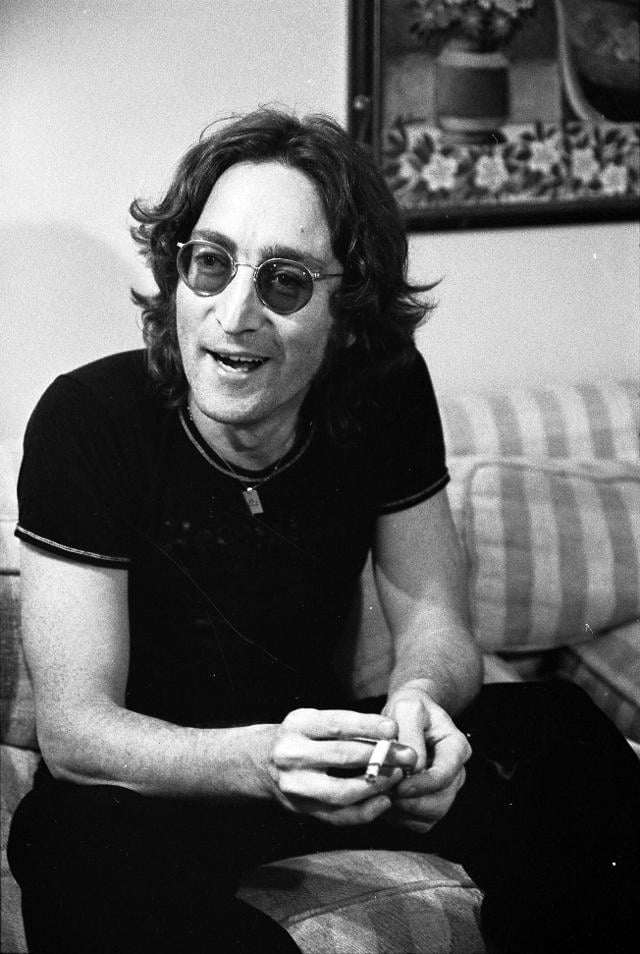
Fourteen years later, Oct. 8, 1971, brought the British release of John Lennon’s “Imagine” album. American listeners had received it Sept. 9, so this anniversary marks its arrival in the United Kingdom rather than its worldwide debut. Produced by Lennon, Yoko Ono and Phil Spector, the record combined personal songs with political criticism and a title track that became an enduring appeal for peace.
Compared with the spare arrangements of “John Lennon/Plastic Ono Band,” “Imagine” used a fuller production style. Its songs included “Jealous Guy,” “Gimme Some Truth” and “Oh My Love,” placing vulnerability and confrontation on the same record. The title song’s restrained piano setting made its broad ideas especially accessible. That contrast — a gentle musical surface carrying a challenge to familiar divisions — helped give the song a life beyond its original album.
The recording also reflected a collaborative process. Lennon sang and played piano on “Imagine,” with Klaus Voormann on bass and Alan White on drums; strings were added later in New York. Those details matter because the familiar performance was carefully constructed, not simply captured in one spontaneous moment. Its directness came from an arrangement that left room for the voice and the central message.
On Oct. 8, 1980, Prince released “Dirty Mind,” his third album for Warner Bros. Records. Recorded largely by Prince alone at his home in Mound, Minnesota, it brought rock, synthesizer pop, funk and new wave into a lean, unified sound. Recordings initially intended as demos became the album itself, preserving the urgency Prince heard in them.
The release challenged expectations in both sound and subject matter. Warner Bros. worried that explicit lyrics would limit radio play, but Prince’s vision prevailed. Alongside the provocative material were the melodic “When You Were Mine,” the community-minded “Uptown” and the closing “Partyup.” The latter carried an anti-war message inspired by anti-draft demonstrations. “Dirty Mind” established a clearer artistic identity: Prince would not separate dance music, rock energy, sexuality and social commentary into different categories.
That same day, Talking Heads released “Remain in Light,” another album that made familiar genre boundaries less useful. David Byrne, Chris Frantz, Tina Weymouth and Jerry Harrison developed its foundation through instrumental jams influenced by Afrobeat, particularly the rhythmic approach associated with Fela Kuti. Producer Brian Eno helped shape the material into layered recordings.
Rather than treating rhythm as backing for a finished song, the musicians made overlapping patterns central to the writing process. Contributors included guitarist Adrian Belew, singer Nona Hendryx and trumpeter Jon Hassell. “Born Under Punches,” “Crosseyed and Painless” and “Once in a Lifetime” showed different possibilities within that approach. The album’s later inclusion in the National Recording Registry in 2016 recognized its lasting importance.
On Oct. 8, 1996, Marilyn Manson released “Antichrist Superstar,” a second studio album that carried industrial rock and gothic theatricality into a larger commercial arena. Its concept followed a transformation from powerlessness toward destructive authority, using abrasive music and unsettling imagery to question control. The album debuted at No. 3 on the Billboard 200, making its challenging presentation a mainstream commercial event.
Across these five milestones, Oct. 8 offers more than a collection of release anniversaries. Lewis made the piano a vehicle for rock ’n’ roll intensity; Lennon joined accessible melody to searching ideas; Prince and Talking Heads rebuilt musical boundaries from different directions; and Marilyn Manson brought confrontational theater to the album format. Their recordings invite a common question: What happens when musicians refuse to keep familiar sounds in familiar roles?
More like this:


- Most Popular


- Top Stories


- Most Recent