
October 7 in History: From East Germany's Establishment to the 2023 Israel Attacks and Resulting War
This date spans pivotal events from the Battle of Lepanto and the founding of East Germany to the 2023 attacks in Israel and the war that followed.

This Day in History: October 7
On October 7, 2023, Hamas-led armed groups attacked southern Israel from the Gaza Strip, killing about 1,200 people, most of them civilians, and taking approximately 250 hostages. The assault included attacks on communities, military positions, and a music festival. Israel responded with a military campaign in Gaza, beginning a war that caused extensive destruction, displacement, and loss of life among Palestinians. The attack and ensuing war became a major turning point in the Israeli-Palestinian conflict, with consequences across the Middle East.
Get The Latest News!
Don't miss our top stories and need-to-know news everyday in your inbox.
The date remains significant because of the lives lost, the hostage crisis, the humanitarian emergency in Gaza, and the conflict’s effects on regional security and international diplomacy. Its longer-term importance lies in how deeply it altered communities and intensified unresolved questions about security, Palestinian self-determination, and prospects for peace.
Major Historical Events
1571: The Battle of Lepanto
Centuries earlier, October 7 marked a major confrontation in the Mediterranean. At Lepanto, near the western coast of Greece, the Holy League—a coalition that included Spain, Venice, and the Papal States—defeated an Ottoman fleet.
The battle followed Ottoman expansion in the eastern Mediterranean, including the conquest of most of Venetian-held Cyprus. It was one of the largest naval engagements fought primarily with oared warships. Although the Ottomans rebuilt their fleet and retained Cyprus, the defeat checked their naval momentum and strengthened confidence among their European rivals. Lepanto became an enduring subject in European art, literature, and religious memory, even though it did not end Ottoman power at sea.
1763: Britain Issues the Royal Proclamation
After the Seven Years’ War, Britain faced the challenge of governing its expanded North American territories and managing relations with Indigenous nations. On October 7, King George III issued a proclamation that restricted colonial settlement west of a boundary generally following the Appalachian Mountains.
The measure sought to reduce frontier conflict and placed Indigenous land purchases under Crown authority. Many colonists resented the restrictions, while settlers continued crossing the boundary. The proclamation contributed to tensions between Britain and its American colonies. It also became an important document in the history of Indigenous land rights, particularly in Canada, where it remains part of the legal framework governing relations between the Crown and Indigenous peoples.
1949: East Germany Is Established
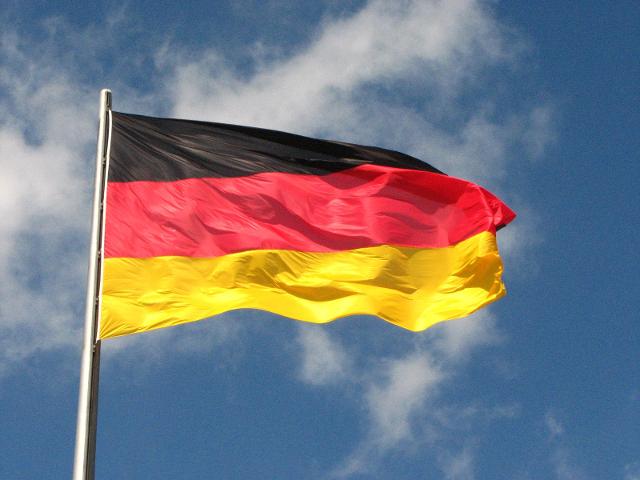
Germany’s division became formal with the creation of the German Democratic Republic on October 7. Founded in the Soviet occupation zone, East Germany followed the establishment of West Germany earlier that year.
Despite its name, the new state developed into a one-party dictatorship dominated by the Socialist Unity Party. Its government operated within the Soviet-led political and economic system, while West Germany aligned with Western Europe and the United States. The two states embodied the wider Cold War division of Europe. Their separation lasted until German reunification in 1990.
1959: Luna 3 Photographs the Moon’s Far Side
A different kind of Cold War milestone occurred ten years later. The Soviet spacecraft Luna 3 took the first photographs of the Moon’s far side, which cannot be seen directly from Earth because the Moon keeps nearly the same face toward our planet.
The images were grainy, but they revealed a landscape with fewer large, dark plains than the familiar near side. Engineers had designed a spacecraft that could photograph the surface, develop its film onboard, and transmit the images back to Earth. The mission expanded knowledge of the Moon and demonstrated how robotic spacecraft could explore places beyond human reach.
1982: Cats Opens on Broadway
Andrew Lloyd Webber’s musical Cats opened at New York’s Winter Garden Theatre on October 7, following its successful London debut in 1981. Based on poems by T. S. Eliot, the production combined music, dance, elaborate costumes, and an unusual story centered on a gathering of cats.
Its Broadway run continued for nearly eighteen years. Together with its international productions, the show helped establish a model of large-scale musical theater that could reach audiences across languages and national borders. The song “Memory” also found a lasting life beyond the stage.
1985: The Achille Lauro Is Hijacked
Four members of the Palestine Liberation Front seized the Italian cruise ship Achille Lauro off Egypt. They demanded the release of Palestinians held in Israeli prisons.
During the hijacking, they murdered Leon Klinghoffer, a 69-year-old American passenger who used a wheelchair, and threw his body overboard. The crisis ended after negotiations, but the interception of an aircraft carrying the hijackers produced a diplomatic confrontation between Italy and the United States. The incident drew attention to maritime terrorism and exposed gaps in international arrangements for prosecuting attacks on ships.
2001: Military Operations Begin in Afghanistan
Following the September 11 attacks, the United States and Britain began air strikes in Afghanistan on October 7. Their targets included al-Qaeda facilities and the Taliban government, which had provided sanctuary to the organization’s leadership.
Working with Afghan forces opposed to the Taliban, the intervention quickly removed the Taliban government from power. It then developed into a prolonged conflict involving insurgency, reconstruction efforts, and international military deployments. The war ended for U.S. forces in 2021, when they withdrew and the Taliban returned to power. Its legacy includes profound effects on Afghan society, regional politics, and debates over military intervention.
2023: Attacks in Israel Begin a New War
The Hamas-led assault described at the opening brought longstanding tensions into a new and devastating phase. It followed years of blockade, recurring armed conflict, failed negotiations, and unresolved disputes over territory and sovereignty.
The ensuing war affected civilians on both sides, displaced much of Gaza’s population, and drew sustained international involvement. October 7 became a defining date for those directly affected and a major reference point in the wider history of the conflict.
Notable Births
Danish physicist Niels Bohr, born in 1885, helped explain atomic structure and became a central figure in the development of quantum physics. His work changed scientific understanding of matter, while his institute in Copenhagen became an important meeting place for researchers from around the world.
Desmond Tutu, born in South Africa in 1931, became an Anglican archbishop and a prominent opponent of apartheid. Awarded the Nobel Peace Prize in 1984, he later chaired South Africa’s Truth and Reconciliation Commission, which investigated abuses committed during the apartheid era.
Born in Paris in 1955 to Chinese parents, cellist Yo-Yo Ma built an international career spanning classical music and cross-cultural collaboration. His Silkroad initiative brought musicians from different traditions together, widening the possibilities of musical exchange.
Brazilian footballer Gilberto Silva, born in 1976, was a key defensive midfielder in Brazil’s 2002 World Cup-winning team. His career with clubs including Arsenal also made him a notable figure in international professional football.
Notable Deaths
American writer Edgar Allan Poe died in Baltimore in 1849 at age forty. His poetry and stories helped shape horror fiction, while his detective stories established conventions later writers developed. The precise circumstances of his death remain uncertain.
Russian journalist Anna Politkovskaya was murdered in Moscow in 2006. Known for reporting on the Chechen wars and documenting human rights abuses, she left a legacy closely associated with investigative journalism and the risks faced by reporters.
In 2020, Mexican chemist Mario Molina died at age seventy-seven. His research helped establish how chlorofluorocarbons damage the ozone layer. That work contributed to international action to protect it, and he shared the 1995 Nobel Prize in Chemistry.
October 7 brings together histories of conflict, discovery, creativity, and public service.
More like this:



- Most Popular


- Top Stories


- Most Recent