


On This Day: Michelangelo’s David, St. Augustine and Other Defining September 8 Events
This date spans milestones from the unveiling of Michelangelo’s David and the founding of St. Augustine to the start of the siege of Leningrad and the debut of Star Trek.
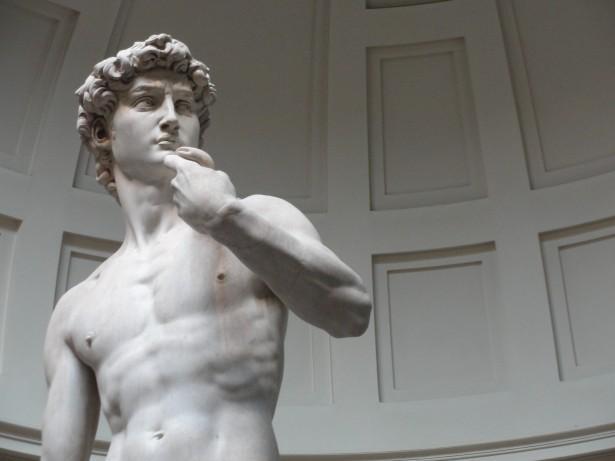
On September 8, one of the most consequential events in world history took place in 1504, when Michelangelo’s statue of David was unveiled in Florence. At first glance, a work of art may seem less important than a battle or treaty, but David became far more than a sculpture. It stood for the confidence of Renaissance Florence, showed what human skill and imagination could achieve, and helped define a turning point in European cultural history. Its influence has lasted for centuries, shaping ideas about beauty, civic identity, and the role of art in public life.
Get The Latest News!
Don't miss our top stories and need-to-know news everyday in your inbox.
That moment came during the Italian Renaissance, a period when cities such as Florence were investing heavily in learning, architecture, and visual art. Michelangelo carved David from a large block of marble that earlier artists had abandoned as difficult to use. The finished figure, placed near Florence’s seat of government, represented the biblical David before his fight with Goliath. For Florentines, it also carried a political meaning: a smaller republic standing firm amid stronger rivals. Over time, the statue became one of the best-known artworks in the world and a lasting symbol of Renaissance culture.
September 8 marked another major turning point in 1565, when the Spanish founded St. Augustine in present-day Florida. It became the oldest continuously inhabited European-established settlement in what is now the continental United States. The settlement was part of Spain’s effort to protect its shipping routes and expand its presence in the Americas. Its survival showed how imperial rivalry, trade, religion, and military strategy were closely linked in the early colonial era. St. Augustine still matters because it connects modern North America to the long and complex history of Indigenous peoples, European colonization, and Atlantic empire.
In 1664, the Dutch surrendered New Amsterdam to the English, who renamed it New York. This was one episode in a larger struggle for commercial power and territorial control. The transfer changed the future of one of the world’s most important cities. Under English rule, the colony became more firmly tied to the system that shaped the eastern seaboard of North America. The event also reminds us that cities often begin as strategic outposts and trading centers before growing into major global hubs.
September 8 also brought a decisive moment in nineteenth-century South America. In 1822, General José de San Martín left Peru after his meeting with Simón Bolívar in Guayaquil and his decision to step aside from the independence struggle’s final phase. San Martín had already played a central role in freeing parts of Argentina, Chile, and Peru from Spanish rule. His withdrawal cleared the way for Bolívar’s forces to complete the campaign in the north and west of the continent. The date is important because it reflects the difficult leadership choices that shaped Latin American independence, not just battlefield victories.
A very different kind of milestone arrived in 1888, when the first known recorded football league match was played in England as the Football League began competition. Organized league play helped turn football from a regional pastime into a structured mass sport. Standard schedules, regular competition, and wider public attention all helped the game spread. What began as a local sporting development would eventually influence global culture, media, and business in ways few could have predicted at the time.
The twentieth century gives this date an especially heavy place in memory. In 1941, during the Second World War, the siege of Leningrad began as German forces tightened their encirclement of the Soviet city. The blockade lasted for more than two years and caused immense civilian suffering through hunger, cold, and bombardment. Hundreds of thousands died. At the time, the siege was part of a broader campaign on the Eastern Front, one of the war’s largest and deadliest theaters. Today it is remembered not only as a military episode but also as a human tragedy that showed the endurance of civilians under extreme conditions.
Only a few years later, in 1951, representatives from 48 nations signed the Treaty of San Francisco, formally ending the state of war between Japan and many of the Allied powers. The treaty was a major step in rebuilding international relations after the Second World War in Asia and the Pacific. It helped restore Japan’s sovereignty and set the stage for the country’s postwar recovery and reentry into global diplomacy. Even so, not every wartime issue was settled, and debates over memory, territory, and responsibility continued long afterward. That mix of closure and unfinished business is part of why the treaty still matters.
Science and innovation also have a place on this date. In 1966, the television series Star Trek first aired in the United States. Although it began as entertainment, its long-term impact reached much further. The show imagined future technologies, multicultural cooperation, and space exploration in ways that influenced viewers, scientists, engineers, and later creators. Many people who worked in technology and aerospace later said it helped shape their ambitions. Its legacy shows how popular culture can affect scientific imagination as much as laboratories and textbooks do.
Change was unfolding in the social sphere as well. In 1974, U.S. President Gerald Ford granted a pardon to former President Richard Nixon following the Watergate scandal. The decision was controversial at the time and remains widely debated as a matter of political judgment and constitutional power. Supporters argued that it would help the country move on from a prolonged crisis, while critics believed it weakened accountability. Historically, the pardon matters because it raised lasting questions about executive authority, public trust, and how democracies respond to misconduct at the highest level.
Among notable births, 1157 saw the birth of Richard I of England, often remembered as Richard the Lionheart. He became one of medieval Europe’s most famous warrior-kings because of his role in the Third Crusade. His reign also shows the international character of monarchy in that era, when rulers often held lands, interests, and loyalties across multiple regions.
Centuries later, in 1841, Antonín Dvorák was born in what is now the Czech Republic. He became one of the leading composers of the nineteenth century, blending classical forms with folk influences from his homeland. Works such as his symphonies and chamber music helped bring regional musical traditions into wider international concert life.
Another major cultural figure arrived in 1925 with the birth of Peter Sellers. His performances in film and comedy, especially through sharply drawn characters, made him one of the most distinctive entertainers of the twentieth century. His work had a lasting influence on screen comedy and acting style.
In 1932, Patsy Cline was born in the United States. She became one of country music’s most admired voices, known for emotional clarity and crossover appeal. Her recordings helped broaden the audience for country music and influenced generations of singers in several genres.
Turning to notable deaths, September 8, 1949 marked the death of Richard Strauss, the German composer and conductor. Strauss was one of the most important musical figures of the late nineteenth and early twentieth centuries. His operas and orchestral works bridged the Romantic era and the modern age, showing how musical language could evolve while remaining connected to earlier traditions.
Looking across these moments, September 8 brings together art, empire, war, diplomacy, sport, music, and public life.
More like this:





- Most Popular



- Top Stories



- Most Recent


