


Saint Anthony’s Offers Freedom From Smoking
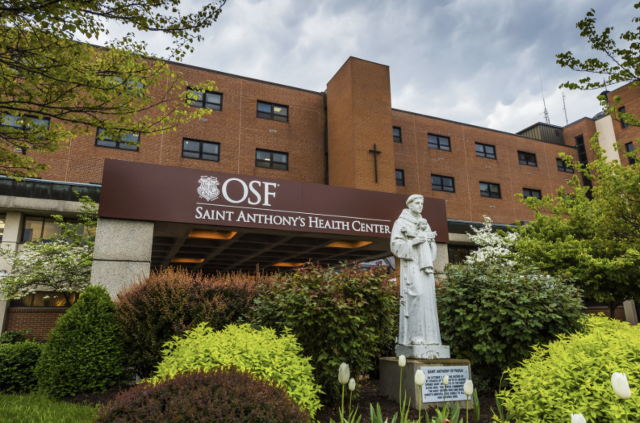
 ALTON – Help is available for smokers who want to kick the habit permanently - through an upcoming smoking cessation program from OSF Saint Anthony’s Health Center. “Freedom from Smoking” starts with an orientation session on Monday, January 26 at 6 p.m. in the Auditorium of OSF Saint Clare’s Medical Office Building, 815 East Fifth Street.
“If someone wants to know how to quit, then this is the program to turn to,” says Tina Bennett, a trained smoking cessation facilitator at OSF Saint Anthony’s. “We follow the American Lung Association’s step-by-step process that includes information about quitting, recovery and support, stress management, weight control and relapse prevention.”
Get The Latest News!
Don't miss our top stories and need-to-know news everyday in your inbox.
At the beginning and end of the session, participants will receive free pulmonary function screenings to measure lung capacity, as well as blood pressure readings throughout the eight weeks. “Once a person stops smoking, they typically see a decrease in coughing and shortness of breath,” says Bennett.

Participants in the Freedom from Smoking program learn more about the effects of smoking, plus review their own personal commitment and readiness to quit smoking and reduce the hesitation towards quitting.
“Participants adjust to a new life that does not involve smoking,” says Bennett. “They learn how to handle cravings through various coping strategies.”
Benefits of smoking cessation, from the U.S. Department of Health and Human Services, include:
- 20 minutes after quitting: Your heart rate drops to a normal level.
- 12 hours after quitting: The carbon monoxide level in your blood drops to normal.
- Two weeks to three months after quitting: Your risk of a having a heart attack begins to drop; your lung function begins to improve.
- One to nine months after quitting: Your coughing and shortness of breath decrease.
- One year after quitting: Your added risk of coronary heart disease is half that of a smoker’s risk.
- Five to 15 years after quitting: Your risk of having a stroke is reduced to that of a nonsmoker’s; your risk of getting cancer of the mouth, throat or esophagus is half that of a smoker.
- 10 years after quitting: Your risk of dying from lung cancer is about half that of a smoker’s; your risk of getting bladder cancer is half that of a smoker’s; your risk of getting cervical cancer or cancer of the larynx, kidney or pancreas decreases.
- 15 years after quitting: Your risk of coronary heart disease is the same as that of a nonsmoker.
To register or for more information about the eight-week Freedom from Smoking program, please call 618-465-2264.
More like this:




- Most Popular



- Top Stories

- Most Recent


- Sign In
- Home
- Video
- News
-
Weather
 Sponsored by Michael Ryan Exteriors - Roofing Professionals
 - Sports
- Obits
- Events
- Radio
- AP News
- Shop Local
- Classifieds
- Autos
- Real Estate
- Directory
Get the RiverBender App


Follow Us
Copyright © 2026 RiverBender.com All rights reserved.
primary