


Sept. 28 in Music History: From ‘The Memphis Blues’ to Metallica in Moscow
The Sept. 28 milestones span W.C. Handy’s early blues publishing, landmark releases by the Beatles and Stevie Wonder, David Bowie’s Carnegie Hall debut and Metallica’s Moscow concert.
Before hit records could travel by radio or streaming, a piece of sheet music could help carry a regional sound into new homes and dance halls. On Sept. 28, 1912, W.C. Handy’s “The Memphis Blues” went on sale at a Memphis department store, a consequential step in bringing the blues into commercial publishing. Its mixture of blues expression and popular ragtime helped establish Handy as a central figure in the music’s wider recognition.
Get The Latest News!
Don't miss our top stories and need-to-know news everyday in your inbox.
Looking back on Sept. 28, 2026, that publication begins a sequence of milestones involving changing musical forms and expanding audiences: a Beatles single that stretched pop conventions, David Bowie’s arrival on a major New York stage, Stevie Wonder’s ambitious double album and Metallica’s appearance in Moscow. Each offers a different example of musicians finding a larger platform for their work.
Handy’s composition had roots in local politics. After settling in Memphis, he wrote a campaign tune for mayoral candidate E.H. Crump, combining the blues sounds he had encountered with the ragtime style audiences wanted. Retitled “The Memphis Blues,” the music reached customers at Bry’s Department Store on that September day. The Library of Congress identifies the sale as a defining episode in Handy’s career. It was not the invention of the blues, but a significant moment in its movement into published popular music.
On Sept. 28, 1968, the Beatles began a nine-week stay at No. 1 on the Billboard Hot 100 with “Hey Jude.” The run became their longest at the top of the American singles chart. Its scale was matched by its length: At seven minutes and 11 seconds, it became the longest recording to reach No. 1 on that chart up to that time. This was more than another successful Beatles release; it demonstrated the commercial possibilities of an unusually expansive pop single.
Paul McCartney wrote the song with John Lennon’s son Julian in mind during his parents’ separation. What began as personal encouragement grew into a recording built around a long, repeated closing refrain. Released with “Revolution” on the other side, “Hey Jude” joined an intimate premise to a communal musical finish. Its sustained American success showed that listeners would embrace a song whose extended conclusion was central to its appeal, rather than an obstacle to it.
Four years later, on Sept. 28, 1972, David Bowie and the Spiders from Mars performed at Carnegie Hall. The venue’s archive confirms the date and billing, while Bowie’s official website identifies the concert as an important breakthrough into the American market. It was his New York concert debut, bringing the Ziggy Stardust era to a city whose music press and entertainment industry could help turn an emerging attraction into an international star.
The performance’s impact depended on more than publicity. A contemporary Record World review described intense demand for tickets and emphasized the way Bowie’s songs, visual presentation and stage act worked together. That response helps explain the concert’s significance: Bowie was offering an integrated theatrical identity, not simply presenting a collection of songs. Carnegie Hall became an important American showcase for that approach, giving audiences and critics a chance to judge the performer behind the striking photographs.
On Sept. 28, 1976, Stevie Wonder released “Songs in the Key of Life,” making its anniversary in 2026 the album’s 50th. The original package contained two LPs and a four-song bonus EP, an unusually broad canvas even for an artist already celebrated for ambitious albums. Its scope made room for sharply different moods and musical ideas without reducing the project to a collection of unrelated singles.
“Sir Duke” honored Duke Ellington, while “I Wish” revisited childhood through a propulsive funk arrangement. Those songs illustrate the album’s ability to connect musical history, personal memory and immediate pleasure. Its reach extended beyond its original audience: An essay preserved by the Library of Congress traces its influence across R&B, hip-hop, jazz and modern pop. Wonder’s achievement was both popular and artistically far-reaching.
The recognition continued after release. “Songs in the Key of Life” won album of the year at the 1977 Grammy Awards, and the Library of Congress added it to the National Recording Registry in 2005. Those honors mark two different measures of its impact: acclaim from the recording industry in its own era and later recognition as an enduring part of American cultural history.
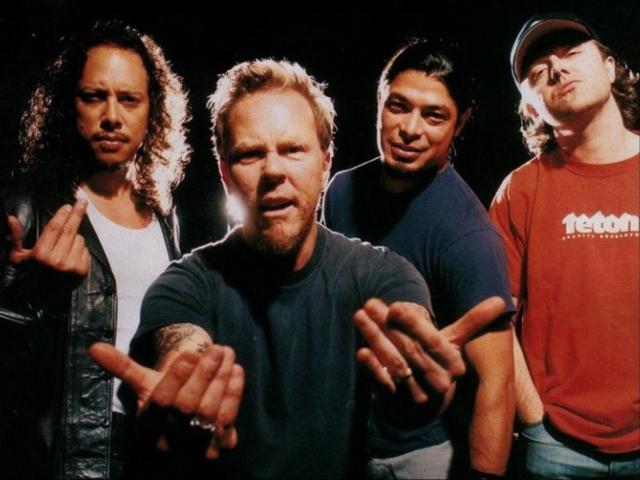
On Sept. 28, 1991, Metallica performed at the Monsters of Rock concert at Moscow’s Tushino Air Field, sharing the bill with AC/DC, the Black Crowes, Pantera and E.S.T. The band’s official archive documents a set that opened with “Enter Sandman” and included “Creeping Death,” “Fade to Black” and “One,” before concluding with an encore ending in “Battery.”
The appearance came in the year Metallica released its self-titled record, widely known as the Black Album. In that context, the Moscow set connected the band’s new material with the heavier repertoire that had established its identity. The documented performance offers a vivid final chapter in this date’s history: music moving beyond its original setting and meeting listeners on a much larger, international stage.
More like this:


- Most Popular


- Top Stories


- Most Recent


