September 24 in History: Nuclear-Test-Ban Treaty Opens for Signature
This date marks the 1996 signing opening of a treaty intended to ban nuclear explosions, alongside milestones in civil rights, science and culture.
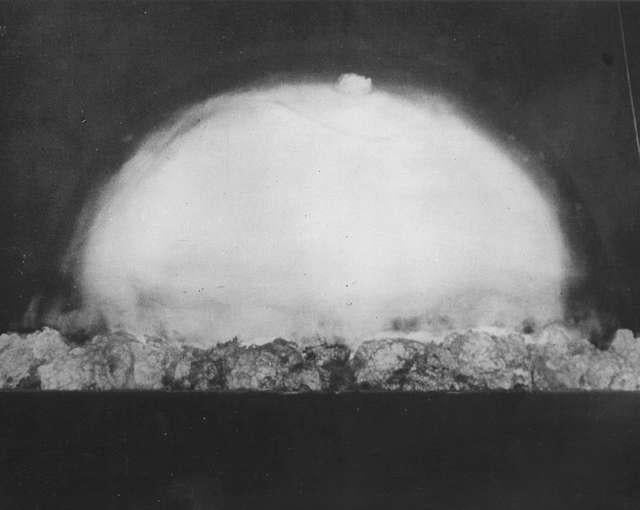
Thirty years ago, on September 24, 1996, the Comprehensive Nuclear-Test-Ban Treaty opened for signature at the United Nations in New York. It sought to prohibit all nuclear weapon test explosions and other nuclear explosions, extending earlier efforts that had restricted testing without banning it altogether. After decades of nuclear competition, the agreement offered a way to limit weapons development and reduce the environmental dangers of testing.
The treaty remains significant for both its ambition and its practical achievements. It helped establish a worldwide monitoring network capable of detecting evidence of nuclear explosions. However, its entry-into-force rules require ratification by 44 specifically named countries, a condition that has long delayed its becoming legally binding. The anniversary highlights both the possibilities and the difficulties of international cooperation.
Major Historical Events
1789: The United States establishes its federal court system
A newly adopted constitution needed institutions to put it into practice. On September 24, President George Washington signed the Judiciary Act of 1789, establishing the basic structure of the American federal judiciary.
The Constitution had provided for a Supreme Court but left Congress to organize much of the system beneath it. The act created federal district and circuit courts, set the Supreme Court’s initial membership at six justices, and established the office of attorney general. Although later legislation changed many details, this framework helped define how national laws would be interpreted and enforced.
1852: Henri Giffard demonstrates powered airship flight
Above France, engineer Henri Giffard made the first generally recognized flight in a powered, steerable airship. His hydrogen-filled craft used a small steam engine to drive a propeller during a journey from Paris toward Trappes.
Ordinary balloons traveled largely at the mercy of the wind. Giffard showed that propulsion and steering could give an aircraft some control over its course, although his engine was too weak to overcome stronger winds or bring him back to his starting point. The experiment marked an important step toward practical airships and controlled flight.
1932: The Poona Pact changes plans for political representation in India
Negotiations between representatives of oppressed castes and Hindu leaders produced the Poona Pact in British-ruled India. B. R. Ambedkar had supported separate electorates for communities then officially called the “Depressed Classes,” many of whose members are now described as Dalits. Mohandas Gandhi opposed separate electorates for these communities and began a fast in prison against the proposal.
The agreement substituted reserved seats within a joint electorate and increased the number of seats allocated to these communities in provincial legislatures. It ended the immediate crisis but did not settle the deeper debate over how historically excluded groups could secure independent political influence. Its legacy remains part of the history of representation and caste reform in India.
1957: Federal intervention supports school integration in Little Rock
Three years after the U.S. Supreme Court ruled racial segregation in public schools unconstitutional, nine Black students faced organized resistance to entering Central High School in Little Rock, Arkansas.
On September 24, President Dwight D. Eisenhower issued an executive order federalizing the Arkansas National Guard and authorized military intervention to enforce federal court orders. Soldiers from the 101st Airborne Division escorted the students into school the following day. The episode demonstrated that implementing a court ruling could require direct federal protection, while exposing the intense resistance facing the civil rights movement.
1968: 60 Minutes begins broadcasting
American television viewers saw the first edition of CBS’s 60 Minutes, initially presented by Harry Reasoner and Mike Wallace. Its magazine-style format brought several reported stories, interviews, and investigations into a single broadcast.
The program became an influential model for television journalism. Its long-form reporting showed that news could attract a large audience beyond daily headlines, although its methods and editorial decisions also drew scrutiny over the years.
1973: Guinea-Bissau declares independence
After a prolonged armed struggle against Portuguese colonial rule, Guinea-Bissau proclaimed independence at a gathering in the territory’s southeast. The declaration followed years of organizing and fighting by the African Party for the Independence of Guinea and Cape Verde.
Portugal did not immediately accept the declaration. Recognition followed in September 1974, after a revolution in Portugal helped bring its African colonial wars toward an end. September 24 remains Guinea-Bissau’s independence anniversary, marking a major stage in the wider process of African decolonization.
1996: A nuclear-test ban opens for signature
Against this longer background of changing international institutions, the Comprehensive Nuclear-Test-Ban Treaty opened for signature. U.S. President Bill Clinton signed first, followed by representatives of many other countries.
Unlike the 1963 Partial Test Ban Treaty, which prohibited explosions in the atmosphere, underwater, and in outer space, the new agreement also covered underground testing. Its verification arrangements combined seismic, hydroacoustic, infrasound, and radionuclide monitoring, making scientific cooperation central to its purpose.
2014: India reaches Mars
India’s Mars Orbiter Mission, commonly known as Mangalyaan, successfully entered orbit around Mars. The achievement made India the first country to reach Martian orbit on its first attempt and the first Asian country to place a spacecraft in orbit around the planet.
Developed by the Indian Space Research Organisation, the mission primarily demonstrated technologies needed for interplanetary travel while also carrying scientific instruments. It expanded India’s space capabilities and added another national program to the exploration of Mars.
Notable Births
Gerolamo Cardano, born in 1501, was an Italian physician, mathematician, and writer. His book Ars Magna helped advance algebra by publishing methods for solving cubic and quartic equations. His investigations of gambling also contributed to the early development of probability theory.
F. Scott Fitzgerald arrived in 1896 and became one of the best-known American novelists of the twentieth century. Through works including The Great Gatsby, he explored ambition, wealth, social status, and disappointment. His writing helped shape the literary image of the Jazz Age.
John Arne Riise was born in 1980 in Norway. The footballer became known for his powerful left-footed shots and long career with clubs including Liverpool and Roma. He helped Liverpool win the 2005 UEFA Champions League and became Norway’s most-capped men’s international player.
Notable Deaths
Paracelsus died in 1541. The Swiss-born physician challenged established medical teaching and promoted the use of chemical substances in treatment. Although much of his thinking belonged to the intellectual world of his time, his emphasis on dosage helped lay foundations for toxicology.
Pedro I of Brazil died in 1834, aged 35. He had declared Brazil’s independence from Portugal in 1822 and became its first emperor. Also briefly king of Portugal as Pedro IV, he later played a central role in the struggle over constitutional government there.
Theodor Seuss Geisel, known as Dr. Seuss, died in 1991. His inventive language and illustrations made books such as The Cat in the Hat important fixtures of children’s reading. His legacy also includes continuing examination of racial stereotypes in some earlier work.
Françoise Sagan died in 2004. The French novelist achieved international recognition as a teenager with Bonjour Tristesse. Her fiction’s direct style and attention to emotional uncertainty made her a distinctive voice in postwar literature.
September 24 brings together treaties, political struggles, scientific experiments, and creative lives.
More like this:





- Most Popular



- Top Stories



- Most Recent