


This Day in History: October 5 and the Events That Shaped It
From the Women’s March on Versailles to milestones in science, culture and democracy, October 5 has witnessed events with lasting impact.
This Day in History: October 5, 2026
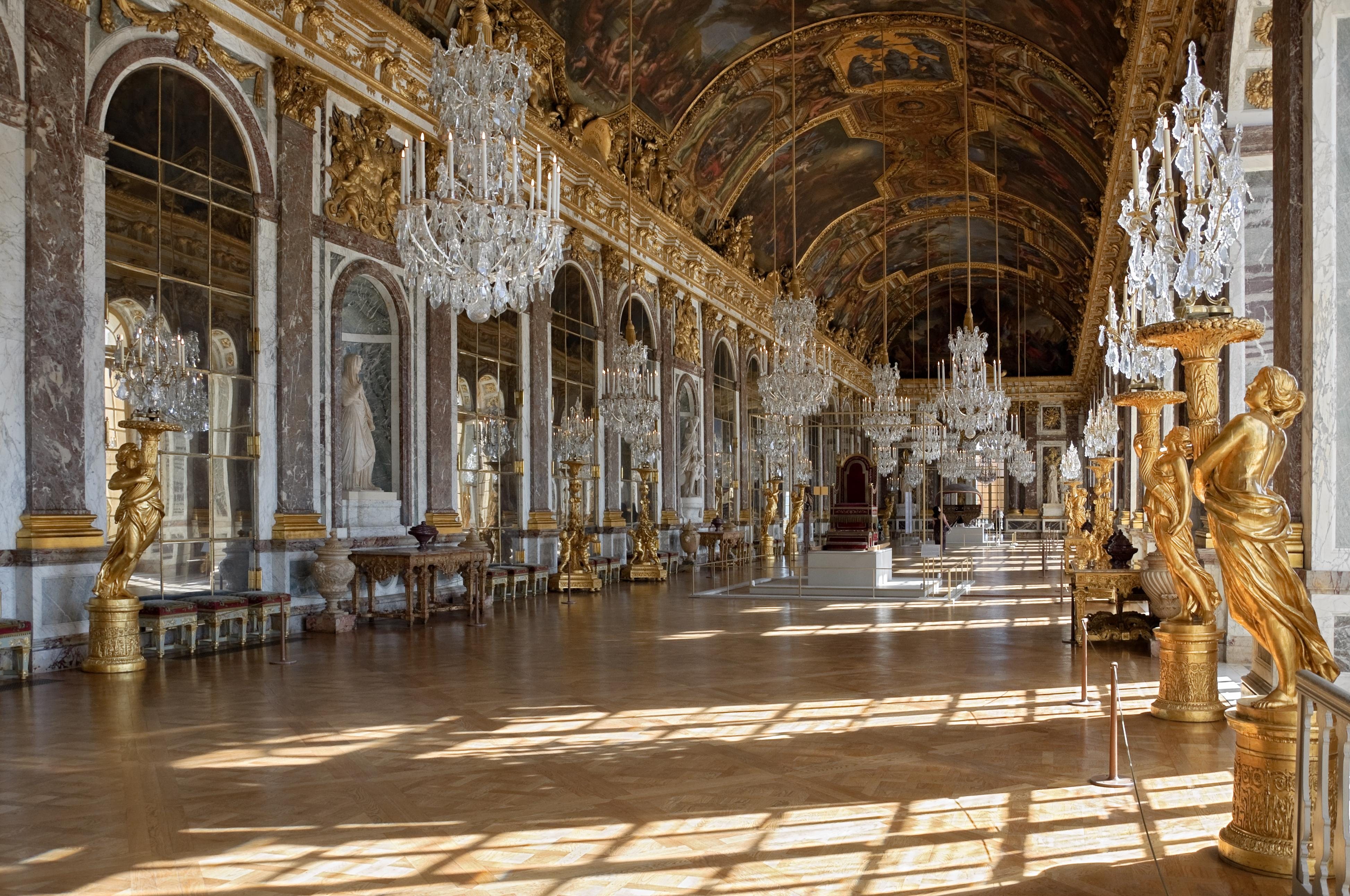
On October 5, 1789, thousands of women marched from Paris to Versailles, demanding bread and action from King Louis XVI. France was already in revolution, and high food prices had made daily life increasingly difficult. The march became a turning point: the following day, the royal family was brought to Paris, where the monarchy faced much closer public pressure. Remembered as the Women’s March on Versailles, it showed how ordinary people—especially women largely excluded from formal politics—could change the direction of national events. It remains an important example of how economic hardship and demands for political accountability can become connected.
Major Historical Events
1789: The Women’s March on Versailles
Get The Latest News!
Don't miss our top stories and need-to-know news everyday in your inbox.
Bread shortages helped bring crowds together in Paris, but their concerns extended beyond food. Many feared that the king and his advisers would resist the changes introduced since the revolution began that summer. Women from the city’s markets joined other demonstrators on the journey to Versailles; members of the National Guard later followed.
After tense negotiations and violence at the palace the next morning, Louis XVI agreed to move to Paris with his family. The National Assembly subsequently relocated as well. Bringing both institutions to the capital weakened the court’s independence and placed the revolutionary government closer to the people whose demands were helping shape it.
1910: Portugal Becomes a Republic
More than a century later, an uprising in Lisbon ended Portugal’s monarchy. Republican forces proclaimed a republic on October 5, 1910, and King Manuel II went into exile.
Discontent had grown over political instability, financial problems, and the monarchy’s handling of national affairs. The assassination of King Carlos I and his eldest son in 1908 had further weakened the institution. The new republic introduced changes in education, civil law, and relations between church and state, but struggled with frequent changes of government. A military coup ended the First Republic in 1926. October 5 nevertheless remains a central date in Portugal’s constitutional history.
1948: An International Conservation Organization Is Founded
At Fontainebleau, France, representatives of governments and conservation organizations established the International Union for the Protection of Nature. It later became the International Union for Conservation of Nature, or IUCN.
The organization developed a framework for countries and scientists to cooperate on protecting species and habitats. Its later work included the Red List of Threatened Species, which assesses extinction risk using scientific criteria. Founded during a period of expanding international cooperation after World War II, the organization helped make conservation an issue addressed across national borders rather than only within them.
1962: Two British Cultural Exports Make Their Debuts
October 5, 1962, brought the release of the Beatles’ first British single, “Love Me Do,” and the London premiere of Dr. No, the first film in the long-running James Bond series.
Neither release alone created Britain’s growing influence in popular entertainment, but both helped define it. The Beatles went on to reshape songwriting, recording practices, and the international music business. The Bond films established a widely imitated combination of espionage, action, technology, and spectacle. Their shared anniversary marks an early moment in the expansion of British popular culture to worldwide audiences.
1984: Marc Garneau Becomes the First Canadian in Space
Space shuttle Challenger launched on mission STS-41-G with Marc Garneau aboard, making him the first Canadian to travel into space. A naval officer and engineer, Garneau conducted experiments connected with Canadian research.
The flight also carried important Earth-observation equipment and reflected the growing role of international partners in the American shuttle program. Canada had already contributed robotics through the Canadarm; Garneau’s mission added human spaceflight experience to that partnership. It helped establish a path for later Canadian astronauts and research aboard international missions.
1988: Chile Votes Against Extending Pinochet’s Rule
In a national plebiscite, Chilean voters rejected a proposal that would have allowed General Augusto Pinochet to remain president for another eight-year term. Roughly 56 percent voted “No.”
Pinochet had ruled since the military coup of 1973. The vote took place under provisions of the constitution adopted during his government, while opposition groups organized a broad campaign encouraging participation. The result opened the way to competitive elections in 1989 and a civilian presidency in 1990. Chile’s transition remained complicated by the military’s continuing influence, but the referendum was a decisive step toward restoring elected civilian government.
2000: Mass Protests Help End Miloševic’s Presidency
Large crowds converged on Belgrade after a disputed Yugoslav presidential election. Opposition supporters demanded recognition of Vojislav Koštunica’s victory over Slobodan Miloševic.
Demonstrators entered the federal parliament building and the state television headquarters as strikes and protests increased pressure on the government. Miloševic acknowledged defeat the following day. The transfer of power followed years of war, sanctions, and economic hardship during the breakup of Yugoslavia. Although it did not resolve the region’s remaining disputes, it ended Miloševic’s presidency and changed Serbia’s international relations.
Notable Births
Denis Diderot — 1713
Born in Langres, France, Denis Diderot became a central figure of the Enlightenment. As a principal editor of the Encyclopédie, he helped assemble knowledge about science, trades, philosophy, and the arts. The project encouraged readers to examine established ideas and made practical knowledge part of a broader intellectual conversation.
Louis Lumière — 1864
French inventor Louis Lumière, working with his brother Auguste, helped develop the Cinématographe, a system for filming, copying, and projecting motion pictures. Their public screenings in 1895 were important milestones in cinema’s emergence as a shared commercial entertainment.
Robert H. Goddard — 1882
American physicist Robert Goddard pioneered modern rocketry. In 1926, he launched the first liquid-fueled rocket. His experiments with propulsion and control systems contributed to technologies later used in missiles, scientific rockets, and space exploration.
Václav Havel — 1936
Czech playwright Václav Havel became a prominent dissident under communist rule and helped lead the peaceful political transition of 1989. He subsequently served as president of Czechoslovakia and then the Czech Republic. His writing and public service explored the responsibilities of individuals living within powerful political systems.
Notable Deaths
Tecumseh — 1813
Shawnee leader Tecumseh died at the Battle of the Thames in present-day Ontario during the War of 1812. He had worked to unite Indigenous nations against further loss of their lands and allied with Britain against the United States. His death severely weakened that coalition and its resistance in the Great Lakes region.
Roland Garros — 1918
French aviator Roland Garros was killed in aerial combat shortly before World War I ended. Known for completing the first nonstop flight across the Mediterranean in 1913, he also helped advance early fighter-aircraft armament. The French Open’s venue later took his name.
Steve Jobs — 2011
Apple co-founder Steve Jobs died at age 56. His career helped shape personal computing, digital animation, portable music, and smartphones. Through Apple and Pixar, he influenced both the products people used and the ways technology and entertainment reached global audiences.
October 5 brings together people demanding political change, institutions building international cooperation, and innovators expanding human possibilities.
More like this:




- Most Popular


- Top Stories


- Most Recent


