

This Day in History on August 27: One of the Most Catastrophic Volcanic Events in Recorded History
On this date, Krakatoa erupted in Indonesia. Read on to find out what else has happened on Aug. 27 through the years.
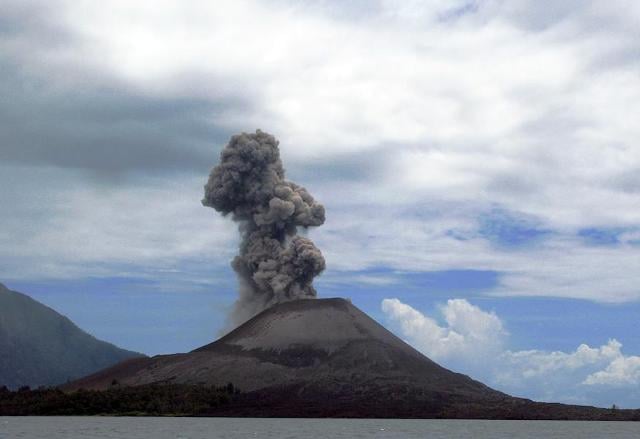
August 27 has witnessed some truly remarkable moments throughout history.
Get The Latest News!
Don't miss our top stories and need-to-know news everyday in your inbox.
First and foremost, the eruption of Krakatoa in Indonesia stands out as one of the most catastrophic volcanic events in recorded history. On August 27, 1883, after weeks of rumbling, the volcano’s climax sent shockwaves heard thousands of miles away. The explosion was so intense it destroyed over two-thirds of the island, triggered massive tsunamis, and released an estimated 20 cubic kilometers of volcanic debris into the atmosphere. The immediate death toll was staggering, with over 36,000 people perishing due to the eruption and the resulting tsunamis. Beyond the human tragedy, Krakatoa’s eruption had far-reaching climatic effects. The volcanic ash and sulfur dioxide injected into the stratosphere caused global temperatures to drop by as much as 1.2 degrees Celsius over the following years, leading to vivid sunsets and unusual weather patterns worldwide. This event profoundly influenced scientific understanding of volcanism and climate, inspiring new research into atmospheric sciences and disaster preparedness.
Traveling back a little earlier, on August 27, 410 AD, the Visigoths, led by King Alaric I, famously sacked Rome. This event marked the first time in nearly 800 years that the city had fallen to a foreign enemy and symbolized the beginning of the decline of the Western Roman Empire. The sack of Rome sent shockwaves throughout the ancient world, shaking the foundations of Roman power and leaving a legacy that has fascinated historians ever since. Despite the destruction, the event also marked a complex transition period where Roman culture and the rising barbarian kingdoms began to merge, influencing the medieval European landscape.
Fast-forwarding to the 20th century, on August 27, 1928, the discovery of penicillin by Alexander Fleming was announced to the scientific community. Although Fleming first observed the antibacterial properties of the mold Penicillium notatum earlier in the year, this date marks the wider recognition of penicillin’s potential to revolutionize medicine. This breakthrough laid the foundation for antibiotics, transforming healthcare by enabling effective treatment of bacterial infections and saving countless lives worldwide.
In the cultural sphere, August 27 is also notable for the birth of several influential figures, including Lyndon B. Johnson, the 36th President of the United States, born in 1908. Johnson’s presidency saw transformative civil rights legislation, the establishment of Medicare and Medicaid, and ambitious social reforms collectively known as the Great Society. His leadership during a turbulent era of American history left an indelible mark on the nation’s social and political fabric.
August 27 serves as a vivid reminder of how a single date can encapsulate the breadth of human experience.
More like this:




- Most Popular



- Top Stories


- Most Recent