

This Day in History on February 5: Pompeii Struck by Earthquake, Foreshadowing Volcanic Eruption
Read on to learn more about what has happened on this date in history.
On February 5, 1958, a U.S. Air Force B-47 bomber collided with an F-86 fighter jet during a training flight over Georgia, and the bomber crew released a Mark 15 nuclear bomb into the waters near Tybee Island to land safely. The weapon was never recovered. At the time, the incident underscored how quickly Cold War routines—constant drills, high readiness, and large stockpiles—could create real-world danger even without an enemy attack. It still matters today because it helped shape public awareness of “broken arrow” accidents (incidents involving nuclear weapons that are not acts of war) and pushed governments to think harder about safety, accountability, and risk management around the most destructive technologies humans have built.
Get The Latest News!
Don't miss our top stories and need-to-know news everyday in your inbox.
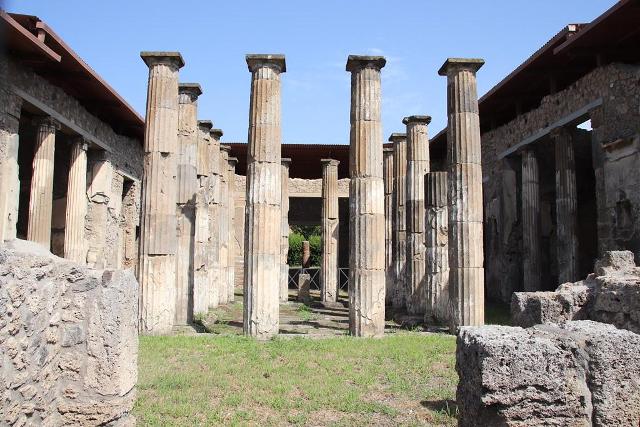
The date’s story stretches much further back than the nuclear age. In 62 CE, Pompeii—then a thriving Roman city near the Bay of Naples—was struck by a strong earthquake. Many buildings were damaged, and repairs continued for years. The quake became significant in hindsight because it was an early warning of the region’s volcanic instability; less than two decades later, Mount Vesuvius erupted and buried Pompeii in ash. Modern archaeology has turned Pompeii into a rare window into everyday Roman life, and the 62 CE earthquake is part of that longer chain of events that shows how natural hazards can reshape societies long before the most famous disaster arrives.
Centuries later, February 5 also marks a turning point in European politics and empire. In 1818, Jean-Baptiste Bernadotte—once a French revolutionary general who rose under Napoleon—became King Charles XIV John of Sweden and Norway. His accession mattered because it stabilized Sweden after years of war and political uncertainty, and it began the Bernadotte dynasty, which remains Sweden’s royal house today. It also reflected how the Napoleonic era rearranged leadership across Europe, sometimes in unexpected ways, as military figures became monarchs and alliances shifted.
In 1840, another major power transition was set in motion in the Pacific. On February 5, Captain William Hobson arrived in New Zealand to negotiate what would become the Treaty of Waitangi. The treaty was signed the next day, but Hobson’s arrival is closely tied to the start of formal British colonial governance. The long-term significance is complex: the treaty became New Zealand’s founding document in many accounts, yet its different English and Maori versions and the way it was applied led to lasting disputes over land, sovereignty, and rights. Today, it remains central to New Zealand’s legal and political landscape, including ongoing efforts to address historical grievances.
Science and technology also have an important February 5 milestone. In 1919, the United Artists film studio was founded by Charlie Chaplin, Mary Pickford, Douglas Fairbanks, and D. W. Griffith. The company was created so filmmakers could control their own work and profits rather than relying entirely on large studios. That mattered at the time because it challenged the growing power of Hollywood’s studio system. Its influence can still be felt in later debates about creative ownership, distribution, and how artists negotiate with large media companies.
The early 1930s brought a different kind of breakthrough. On February 5, 1937, President Franklin D. Roosevelt proposed a plan to expand the U.S. Supreme Court, arguing that the Court was blocking New Deal legislation during the Great Depression. The plan ultimately failed, but it had lasting consequences. It highlighted tensions between elected governments trying to respond quickly to economic crisis and courts tasked with interpreting constitutions. Beyond the United States, it became a widely discussed example of how democracies wrestle with the balance between judicial independence and political power.
The Cold War’s dangers returned to the foreground in 1958 with the Tybee Island incident. Even though the bomb’s nuclear core may not have been installed (details have been debated over the years), the event became a symbol of the risks created by keeping nuclear weapons in constant motion and readiness. It also helped drive improvements in procedures, record-keeping, and safety engineering—changes that matter whenever governments manage high-consequence technologies.
A different kind of contest unfolded in 1971. NASA’s Apollo 14 mission landed on the Moon on February 5, with astronauts Alan Shepard and Edgar Mitchell touching down in the Fra Mauro region. The landing was significant because it demonstrated that the United States could continue lunar exploration after the near-disaster of Apollo 13. Apollo 14 also expanded scientific work on the Moon, including sampling and experiments that improved understanding of lunar geology. The mission remains part of the broader story of how space exploration blends national goals, engineering discipline, and scientific curiosity.
By 1994, February 5 was linked to another form of hazard—one that arrived not from nature or weapons, but from the digital world. The so-called “Michelangelo” computer virus was set to activate on this date, drawing widespread attention to cybersecurity risks. While the actual impact was less catastrophic than many feared, the moment was important because it showed how quickly computer threats could spread and how public awareness could lag behind technical reality. It helped push businesses and individuals toward better antivirus practices and a more cautious approach to digital systems.
The day is also remembered through the lives that began on February 5. In 1914, William S. Burroughs was born in the United States and later became a key figure in Beat literature. His writing, often experimental in form and unsparing in subject matter, influenced later generations of authors and artists and helped expand what mainstream publishers and readers considered possible in fiction. From the world of sports, Cristiano Ronaldo, born in 1985 in Portugal, became one of football’s most recognized players through record-setting goal totals, long-running success across multiple leagues, and a style of training and professionalism that influenced younger athletes. In science and public health, Pakistani physician and activist Dr. Shakil Afridi (born 1961) became widely known in connection with a controversial intelligence operation; regardless of differing views about that episode, it highlighted how health work can become entangled with security and trust, with lasting effects on vaccination efforts and community confidence.
February 5 is also tied to notable deaths that left clear marks on culture and public life. In 1884, Thomas Carlyle died in London. Carlyle’s historical writing and social commentary shaped Victorian-era debates about leadership, industry, and moral responsibility, and his influence—both praised and criticized—reached far beyond Britain through translations and international readership. In 2011, Brian Jacques, the British author of the “Redwall” series, died as well. His books introduced many young readers to long-form fantasy, rich world-building, and stories where courage and community matter, leaving a durable place in children’s literature.
Looking across these moments, February 5 shows how history is built from very different kinds of turning points.
More like this:




- Most Popular



- Top Stories



- Most Recent