This Day in Sports History: Sept. 7 Includes McGwire’s No. 61, Pro Football Hall of Fame Debut, Also Moments From Sept. 4-6
Sept. 7 has featured pivotal moments across boxing, baseball, football, television and tennis, from Corbett’s 1892 title win to Bianca Andreescu’s 2019 U.S. Open triumph.
This Day in Sports History: Sept. 7
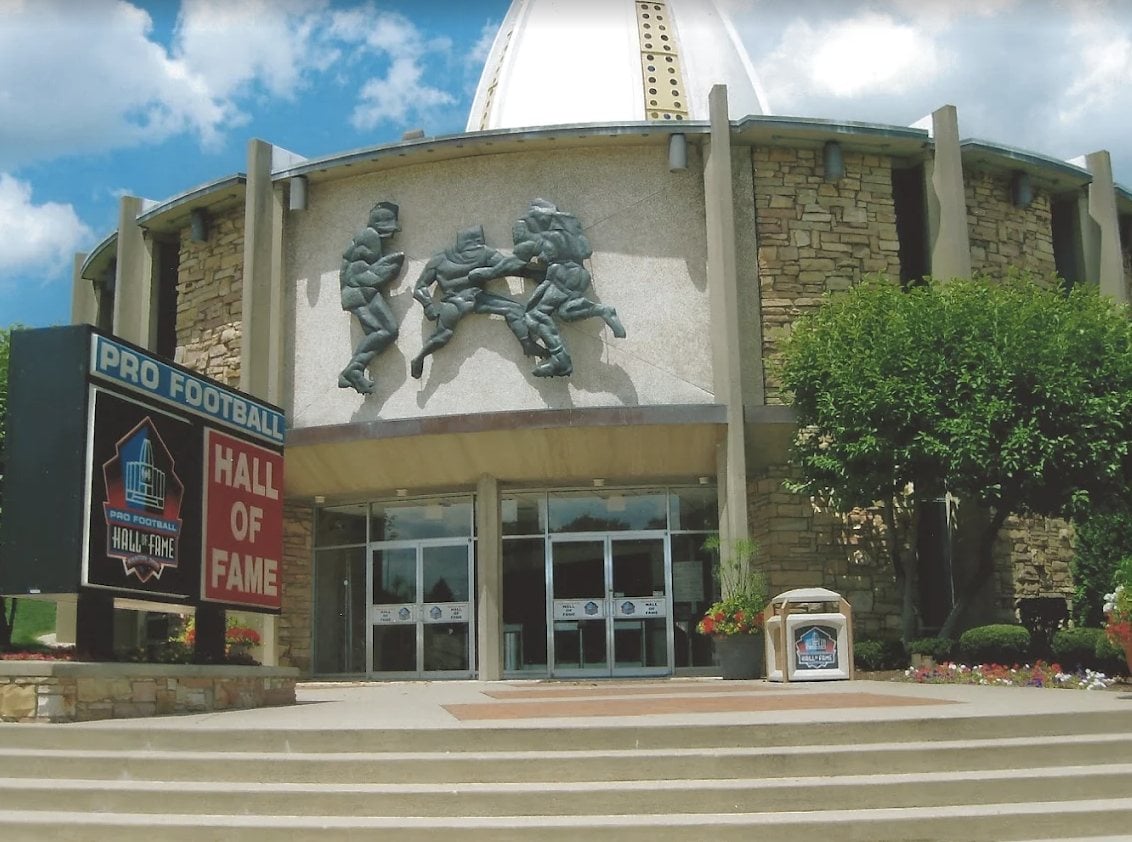
Football took an important step in preserving its past on Sept. 7, 1963, when the Pro Football Hall of Fame was dedicated and opened in Canton, Ohio. Seventeen charter members were enshrined, including George Halas, Red Grange, Jim Thorpe, Sammy Baugh, Mel Hein and league founders and administrators such as Bert Bell and Joe Carr. Canton was a fitting location because the early American Professional Football Association, which became the NFL, was organized there in 1920. The Hall of Fame gave pro football a permanent home for honoring its pioneers at a time when the NFL was expanding in national reach and competing with the American Football League.
Get The Latest News!
Don't miss our top stories and need-to-know news everyday in your inbox.
Sept. 7 has repeatedly marked moments when a sport changed its direction, and perhaps none made that clearer than James J. “Gentleman Jim” Corbett’s heavyweight championship victory in 1892. At the Olympic Club in New Orleans, Corbett knocked out John L. Sullivan in the 21st round to take the world title. Sullivan had been the dominant star of bare-knuckle and early gloved prizefighting, while Corbett’s movement, conditioning and use of the Marquess of Queensberry rules represented a more technical approach. The result did more than end one champion’s reign. It helped establish the model of modern heavyweight boxing, in which footwork, training and ring strategy could overcome raw power and reputation.
On Sept. 7, 1916, the New York Giants beat the Brooklyn Dodgers 4-1 at the Polo Grounds to begin one of baseball’s most remarkable runs. The victory was the first in a 26-game winning streak that remains the longest in Major League history. John McGraw’s club had entered the day at 60-62 and was not in the National League pennant race. Yet the Giants reeled off 26 consecutive wins at home before losing in the second game of a Sept. 30 doubleheader against the Boston Braves. A rain-shortened, tied contest during the streak was not counted in the standings, a detail that has prompted debate over the years, but Major League Baseball recognizes the 26 victories as the record.
Tennis added a lasting first on Sept. 7, 1953, when 18-year-old Maureen “Little Mo” Connolly defeated Doris Hart 6-2, 6-4 in the U.S. National Championships women’s final. The victory completed Connolly’s sweep of the Australian, French, Wimbledon and U.S. singles championships in the same calendar year. She became the first woman to achieve the calendar-year Grand Slam and only the second singles player overall after Don Budge in 1938. Connolly’s accomplishment remains especially striking because her elite career was brief. A horseback-riding accident forced her to retire the following year, when she was only 19.
On Sept. 7, 1979, ESPN went on the air from Bristol, Connecticut, creating the first all-sports, satellite-delivered cable television network. Its first program was “SportsCenter,” anchored by George Grande and Lee Leonard. The debut came during an era when televised sports news was limited largely to local broadcasts, newspaper coverage and short highlights on general-interest network programs. ESPN’s round-the-clock sports focus ultimately altered how fans followed scores, highlights, college athletics and leagues from around the world. Its launch also helped make sports media a larger and more immediate part of daily life.
The St. Louis Cardinals supplied one of the date’s most extraordinary individual performances on Sept. 7, 1993. In the second game of a doubleheader at Cincinnati, outfielder Mark Whiten went 4-for-5 with four home runs and 12 RBIs in a 15-2 Cardinals win over the Reds. Whiten opened with a grand slam, then hit two three-run homers before adding a two-run shot in the ninth inning. The four homers tied the Major League single-game record, and the 12 RBIs matched the record held by another Cardinals great, Jim Bottomley. Whiten had gone about a month without a home run before that night, making the outburst even more unexpected.
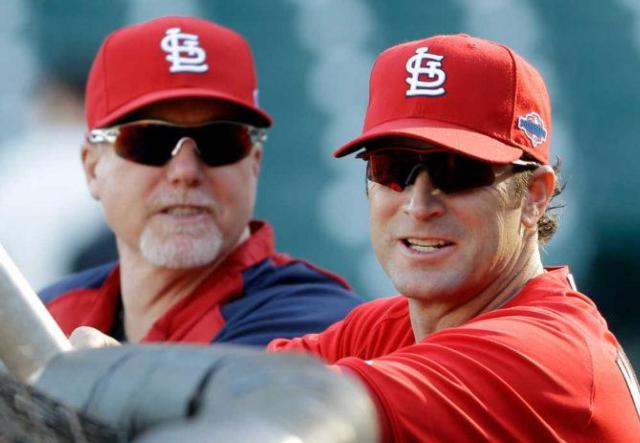 Five years later, St. Louis was the setting for another defining baseball moment. On Sept. 7, 1998, Cardinals first baseman Mark McGwire hit his 61st home run of the season against the Chicago Cubs at Busch Stadium, tying Roger Maris’ single-season Major League mark from 1961. McGwire connected in the first inning off Cubs pitcher Mike Morgan as rival slugger Sammy Sosa watched from right field. The Cardinals won 3-2, and McGwire surpassed Maris the next night with his 62nd homer. He finished the season with 70. For fans across the St. Louis region, No. 61 was the climactic equalizer in a home run chase that had captured national attention all summer.
On Sept. 7, 2019, Canada celebrated its first Grand Slam singles champion when Bianca Andreescu defeated Serena Williams 6-3, 7-5 in the U.S. Open women’s final. Andreescu, 19, became the first Canadian to win a major singles title and did so in only her fourth Grand Slam main-draw appearance. Williams, seeking a record-tying 24th major singles crown, rallied from 5-1 down in the second set to level it at 5-5, but Andreescu steadied herself and closed out the match. The victory confirmed the arrival of a new force in women’s tennis and secured Andreescu’s place in Canadian sports history.
This Day in Sports History: September 6
Cal Ripken Jr.’s pursuit of durability became a baseball record, and then something bigger, on Sept. 6, 1995. The Baltimore Orioles shortstop played in his 2,131st consecutive game, passing Lou Gehrig’s mark of 2,130 that had stood since 1939. Ripken did more than take his usual place in the lineup against the California Angels at Camden Yards: He hit a home run in Baltimore’s 4-2 victory. The game stopped after the fifth inning so Ripken could make a long lap around the field while the sellout crowd saluted him. In an era when injuries, travel and roster changes made uninterrupted play increasingly rare, Ripken’s achievement became an enduring standard for preparation and dependability. He eventually chose to end the streak at 2,632 games in 1998.
The Sept. 6 record begins in 1883 with a Chicago performance that still commands attention. The Chicago White Stockings, the franchise now known as the Cubs, scored 18 runs and collected 18 hits in the seventh inning against the Detroit Wolverines. Chicago went on to win 26-6. The one-inning outburst set major league records for runs and hits in an inning, illustrating just how wild 19th-century baseball could be before modern pitching usage, gloves and defensive strategy took hold. For Illinois baseball history, it remains one of the most remarkable single-inning displays ever produced by a Chicago club.
On Sept. 6, 1920, heavyweight champion Jack Dempsey defended his title by knocking out Billy Miske in the third round at Benton Harbor, Michigan. The fight also marked an early milestone in sports media. Detroit News radio station 8MK relayed reports from the bout, demonstrating how boxing could reach an audience beyond the arena through the new medium of radio. The transmission was not the type of full live ringside call that later became familiar to fans, but it helped point sports toward an age in which a major event could quickly become a shared experience for listeners far from the venue.
Rome’s Olympic Stadium provided two memorable track and field finishes on Sept. 6, 1960. Otis Davis of the United States won the men’s 400 meters in a world-record 44.9 seconds, with West Germany’s Carl Kaufmann given the same hand-timed mark after one of the closest finals in Olympic history. Later that day, fellow American Rafer Johnson completed a tense decathlon victory over his UCLA roommate and friend, Yang Chuan-kwang of Taiwan. Johnson stayed close enough to Yang in the closing 1,500 meters to secure gold by 58 points and set an Olympic record of 8,392 points under the scoring system then in use. Their contest remains a model of elite rivalry carried out with mutual respect.
Chris Evert claimed the first of her record six U.S. Open women’s singles titles on Sept. 6, 1975, rallying past Australia’s Evonne Goolagong 5-7, 6-4, 6-2 at Forest Hills. It was the first U.S. Open played on clay, a surface that favored Evert’s controlled baseline game. The victory was her 85th during a 125-match winning streak on clay and reinforced her standing as the leading player in women’s tennis. Evert would win the next two U.S. Opens as well, beginning a run that made her the event’s most successful women’s singles champion.
Another U.S. Open shock arrived on Sept. 6, 2014, when Japan’s Kei Nishikori defeated top-seeded Novak Djokovic 6-4, 1-6, 7-6 (4), 6-3 in the men’s semifinals. Nishikori had already survived demanding five-set victories over Milos Raonic and Stan Wawrinka, but he handled the favored Djokovic in oppressive heat to reach his first Grand Slam final. The win made Nishikori the first Asian-born man to reach a major singles final in the Open Era. Marin Cilic beat him for the championship two days later, but Nishikori’s run remains a defining breakthrough for Japanese men’s tennis.
On Sept. 6, 2020, Djokovic again figured in a U.S. Open moment unlike any other. The world No. 1 was defaulted from his fourth-round match against Pablo Carreno Busta after he struck a ball in frustration that hit a line umpire. Djokovic trailed 6-5 in the first set when the incident occurred. Tournament officials applied the Grand Slam rulebook’s provision allowing an immediate default for a dangerous or reckless act, and Djokovic lost the ranking points and prize money he had earned in the event. The ruling dramatically changed the tournament’s path, guaranteeing that men’s singles would have a first-time major champion. It also became a widely cited reminder that tennis’ conduct rules apply even to its biggest stars.
This Day in Sports History: Sept. 5
On Sept. 5, 1906, a Saint Louis University football play helped create the game that fans now recognize every fall. With the forward pass newly legal under that season’s rules, SLU’s Bradbury Robinson threw the first documented legal pass in a game against Carroll College in Waukesha, Wisconsin. The first attempt fell incomplete, and the unusual rules of the day awarded the ball to Carroll. Robinson and teammate Jack Schneider soon connected for a touchdown in Saint Louis’ 22-0 victory. The play was more than a clever surprise. It showed that football could move the ball through the air as well as on the ground, opening a path toward the passing offenses that would eventually redefine college and professional football. For the St. Louis sports community, it remains one of the region’s clearest contributions to the national game.
The rule change had come during a period when football was under intense pressure to become safer and less dependent on mass, violent formations. Coaches initially treated the forward pass cautiously, partly because the penalties for failed throws were harsh. Saint Louis coach Eddie Cochems saw an opening rather than a risk. His team had practiced the play in secret before unveiling it against Carroll. The pass did not instantly transform every playbook, but its success provided a working model. Over time, changing rules made throwing more practical, and the sport moved steadily away from an almost entirely running-based style.
Twelve years later, on Sept. 5, 1918, baseball provided a wartime scene that became a fixture of American sports. A U.S. Navy band played “The Star-Spangled Banner” during the seventh-inning stretch of Game 1 of the World Series at Chicago’s Comiskey Park. The Boston Red Sox beat the Chicago Cubs 1-0 behind Babe Ruth’s complete-game, six-hit shutout. The song was not yet the nation’s official anthem; Congress did not grant it that status until 1931. But the response at the ballpark made an impression during World War I. When the Series moved to Boston, Red Sox owner Harry Frazee arranged for the song to be played before games, helping establish a custom that later spread throughout baseball and American sports.
Sept. 5, 1960, supplied the first major international triumph for a boxer then known as Cassius Clay. The 18-year-old American defeated Poland’s Zbigniew Pietrzykowski to win the light heavyweight gold medal at the Rome Olympics. Pietrzykowski was an accomplished European champion, making the final a significant test for the young fighter from Louisville, Kentucky. Clay’s Olympic title gave him a global introduction before he turned professional. Within four years, he had won the heavyweight championship and soon adopted the name Muhammad Ali. His career ultimately reached far beyond boxing, but the Rome gold medal was the first major chapter in one of sports’ most influential lives.
The Olympic movement experienced its darkest day on Sept. 5, 1972, when terrorists from the Black September organization attacked the Israeli delegation at the Munich Games. Two Israeli team members were killed in the initial assault, and nine others were taken hostage. The crisis continued into the next day, when all nine hostages were killed during a failed rescue attempt; a West German police officer also died. The attack shattered Munich organizers’ hope that the Games would project a peaceful, open image of Germany after the 1936 Berlin Olympics. It also changed the way major international events approached security. Competition paused for a memorial service before the Games continued, a decision that remains part of the tragedy’s difficult legacy.
On Sept. 5, 1979, Ann Meyers signed a contract with the Indiana Pacers and became the first woman to receive a tryout with an NBA team. Meyers, a UCLA star and an Olympic gold medalist with the United States in 1976, went to training camp at Hinkle Fieldhouse in Indianapolis. She did not make the Pacers’ roster, but the significance of the opportunity went beyond one preseason competition. Her tryout challenged assumptions about who could be invited into the NBA workplace and became a landmark in the broader push for women’s opportunities in basketball. Meyers later built a distinguished career as a broadcaster and basketball executive, extending her influence on the sport.
St. Louis was again at the center of baseball history on Sept. 5, 1998. Cardinals first baseman Mark McGwire hit his 60th home run of the season against the Cincinnati Reds, becoming the first major leaguer to reach that total since Roger Maris hit 61 in 1961. McGwire’s 60th did not yet break Maris’ single-season record, but it confirmed that the pursuit had reached rare territory and intensified attention on the season-long race with Chicago Cubs slugger Sammy Sosa. McGwire tied Maris two days later and broke the record on Sept. 8 at Busch Stadium. He finished the season with 70 home runs, making 1998 an unforgettable year for Cardinals fans and a defining episode in baseball’s modern history.
Most recently, Sept. 5, 2024, added another achievement to the remarkable Paralympic career of American Oksana Masters. Masters won the women’s H5 road race at the Paris Paralympics, one day after taking gold in the individual time trial. The road-race victory was her second gold medal of those Games and her 19th Paralympic medal at that point, collected across rowing, cross-country skiing, biathlon and cycling. Her success underscored both the range of her athletic career and the growing visibility of Paralympic sport. From Robinson’s experimental throw to Masters’ multi-sport excellence, Sept. 5 offers a sports-history record of innovation, resilience and moments that changed what athletes and fans could imagine.
This Day in Sports History: Mark Spitz Completes a Seven-Gold Olympic Sweep
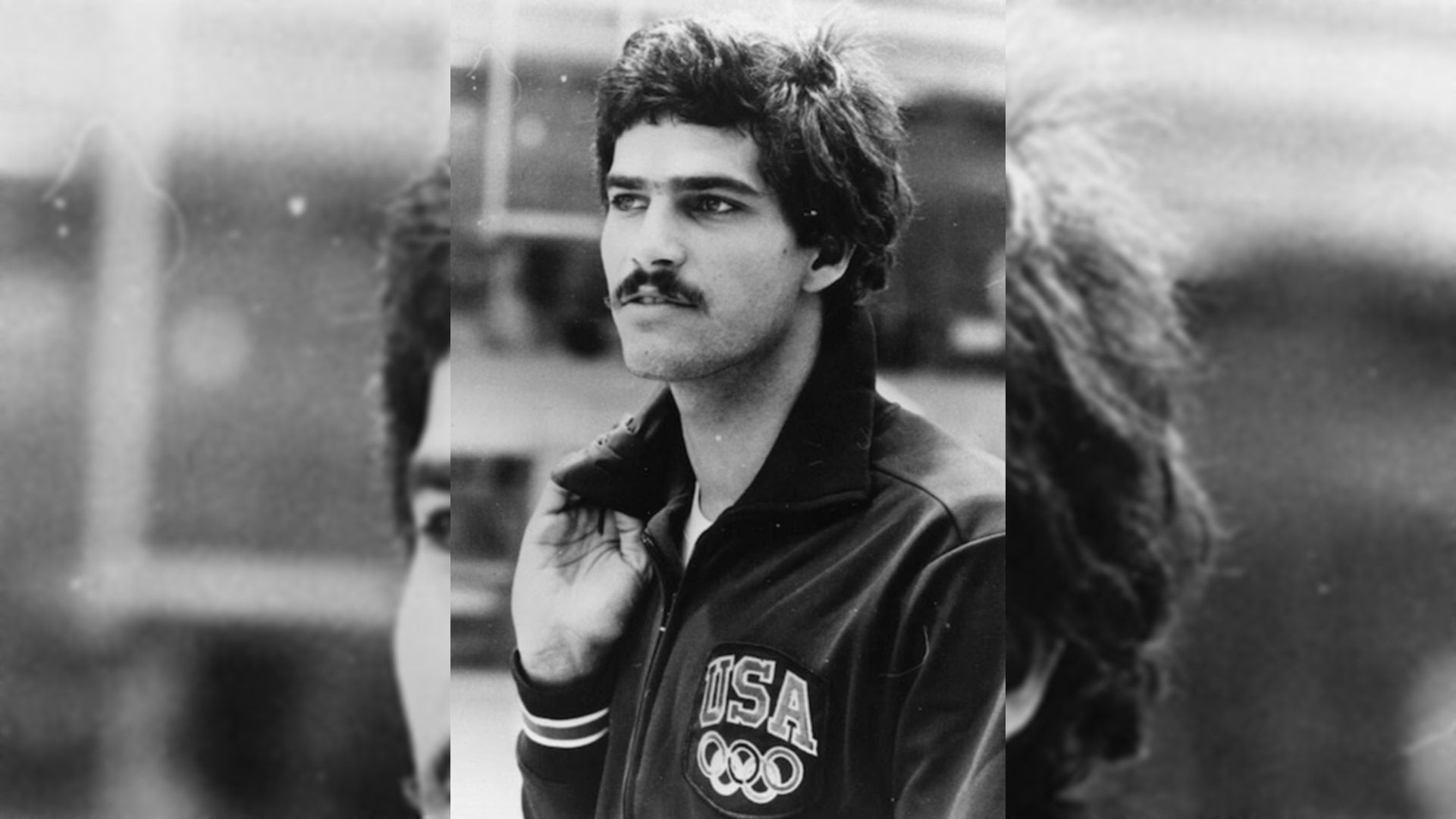
Sept. 4 is best remembered in sports for the finish of Mark Spitz’s extraordinary run at the 1972 Munich Olympics. On this date, Spitz swam the butterfly leg for the United States in the men’s 4x100-meter medley relay, helping Mike Stamm, Tom Bruce and Jerry Heidenreich deliver gold and a world record. It was Spitz’s seventh gold medal of the Games, and each came in world-record time. No athlete had won seven gold medals at one Olympics before him. Michael Phelps finally surpassed that total with eight golds at Beijing in 2008, but Spitz’s Munich achievement transformed the California swimmer into one of the first modern global sports stars and set a standard for Olympic dominance that endured for 36 years.
Long before Munich, a New York Yankees pitcher known as Sad Sam Jones authored one of baseball’s most unusual no-hitters on Sept. 4, 1923. Jones beat the Philadelphia Athletics 2-0 at Shibe Park, allowing no hits despite recording no strikeouts. The feat remains a reminder that a no-hitter is often as much about defense, control and timely outs as overpowering stuff. Jones’ performance came during a landmark Yankees season. New York would go on to win its first World Series, beginning a championship tradition that would make the franchise the most successful in Major League Baseball history.
Nearly a half-century later, Spitz provided the day’s defining international milestone. He entered the final swimming event in Munich with six gold medals, already an unprecedented haul. The U.S. medley relay team had to overcome an early deficit after East Germany’s Roland Matthes produced a record-setting backstroke leg. Bruce closed the gap in the breaststroke, Spitz moved the Americans ahead in butterfly and Heidenreich completed the victory in freestyle. Spitz’s seven-event sweep included four individual gold medals and three relay titles. The accomplishment also underscored the depth of American swimming at the Games, where the United States won 17 of 29 gold medals in the sport.
On Sept. 4, 1993, Jim Abbott gave baseball one of its most inspiring pitching performances. The New York Yankees left-hander threw a 4-0 no-hitter against the Cleveland Indians at Yankee Stadium. Abbott, who was born without a right hand, had developed a seamless method of moving his glove from his left hand to his right forearm after releasing a pitch, allowing him to field his position. Cleveland’s lineup included future stars Jim Thome, Albert Belle and Manny Ramirez, yet Abbott did not allow a hit and held every Indians runner at first base or closer. The no-hitter became the signature moment of Abbott’s 10-year major league career and a lasting example of athletic innovation overcoming a physical limitation.
Six years later, women’s basketball received one of its most enduring highlight-reel moments. With the New York Liberty facing elimination in Game 2 of the 1999 WNBA Finals, Teresa Weatherspoon launched a desperate shot from just beyond midcourt as time expired against the Houston Comets. The ball banked in, giving New York a 68-67 victory and forcing a deciding game in the best-of-three series. Houston won the championship the next day, its third straight title, but Weatherspoon’s shot came at a vital moment for a league still in its third season. It remains one of the defining plays of the WNBA’s formative years and demonstrated the drama the young league could create on its biggest stage.
That same day in New York, another future sports icon survived a pivotal early test. Seventeen-year-old Serena Williams rallied past 16-year-old Kim Clijsters, 4-6, 6-2, 7-5, in the third round of the U.S. Open. Williams trailed 5-3 in the final set before winning 16 of the last 17 points. The match brought together two teenagers who would become major champions and No. 1-ranked players. For Williams, the comeback kept alive a breakthrough run that ended with her first Grand Slam singles title. She beat Conchita Martinez, Monica Seles, Lindsay Davenport and Martina Hingis after the Clijsters match, beginning a Grand Slam career that would ultimately redefine excellence in women’s tennis.
Baseball honored a New England and Chicago White Sox great on Sept. 4, 2000, when the Boston Red Sox retired Carlton Fisk’s No. 27 at Fenway Park. Fisk spent his first 11 major league seasons with Boston before playing 13 more with the White Sox, where he became a key figure for Chicago fans and helped the club reach the 1983 American League Championship Series. His most famous swing, the 12th-inning home run in Game 6 of the 1975 World Series, remains one of baseball’s iconic images. Fisk finished with 376 home runs, was an 11-time All-Star and entered the Hall of Fame in 2000. Retiring his number recognized a catcher whose toughness, longevity and power changed expectations for the position.
Illinois baseball history added its own Sept. 4 chapter in 2024, when Shota Imanaga, Nate Pearson and Porter Hodge combined to no-hit the Pittsburgh Pirates in a 12-0 Chicago Cubs victory at Wrigley Field. Imanaga worked seven hitless innings, Pearson handled a perfect eighth and Hodge retired the side in order in the ninth. It was the 18th no-hitter in Cubs history and the first at Wrigley Field since Milt Pappas’ 1972 gem. The game also reflected a changing major league strategy: Manager Craig Counsell removed Imanaga after 95 pitches, prioritizing the rookie’s health and trusting the bullpen with history. Pearson and Hodge completed the task, turning an individual-style milestone into a team achievement.
From Jones’ unconventional no-hitter in 1923 to Spitz’s record-setting Olympic finale, Abbott’s trailblazing gem, Weatherspoon’s miracle basket, Williams’ championship-making comeback, Fisk’s long-awaited honor and the Cubs’ modern combined no-hitter, Sept. 4 has repeatedly shown how a single day can hold very different forms of sports history. Some moments produced records, some launched legacies and others became symbols of possibility. All remain meaningful because they reached beyond the final score.
More like this:
- Most Popular



- Top Stories

- Most Recent