

This Weekend in History on August 23 and 24: Mt. Vesuvius Erupts, Burying Pompeii
From the eruption of Mt. Vesuvius to the signing of the Molotov-Ribbentrop Pact, here's what has happened in history on August 23 and 24.
August 23rd and 24th stand out in history as days marked by pivotal moments that shaped the course of global events.
Get The Latest News!
Don't miss our top stories and need-to-know news everyday in your inbox.
Arguably the most consequential event associated with August 23rd is the Battle of Stalingrad in 1942. This brutal confrontation between Nazi Germany and the Soviet Union during World War II proved to be a critical turning point in the war. On this day, Adolf Hitler launched Operation Blue, intending to capture the city of Stalingrad (modern-day Volgograd) to secure the eastern front and gain control over the oil-rich Caucasus region. What followed was a months-long siege marked by intense urban warfare, severe casualties, and an unyielding Soviet defense. The battle eventually culminated in the encirclement and surrender of the German 6th Army in February 1943, marking the beginning of the German retreat on the Eastern Front and shifting the momentum in favor of the Allies.
But August 23rd’s historical significance extends far beyond the battlefield. In 1939, this date witnessed the signing of the Molotov-Ribbentrop Pact, a non-aggression treaty between Nazi Germany and the Soviet Union. Named after the foreign ministers Vyacheslav Molotov and Joachim von Ribbentrop, this pact stunned the world by aligning two ideologically opposed regimes. Secret protocols of the agreement divided Eastern Europe into spheres of influence, leading directly to the invasion of Poland and the outbreak of World War II. The pact’s strategic implications and its eventual collapse in 1941 remain subjects of extensive study and debate among historians.
Earlier in history, on August 23, 1305, William Wallace, the Scottish knight and freedom fighter immortalized in popular culture, was executed in London. Wallace had become a symbol of Scottish resistance against English rule during the Wars of Scottish Independence. His capture and brutal execution—hanged, drawn, and quartered—were intended to quash rebellion but instead galvanized future Scottish efforts toward independence.
These snapshots from August 23 across centuries reveal a tapestry of human experience.
August 24 is also a date marked by some of the most significant and transformative events in world history.
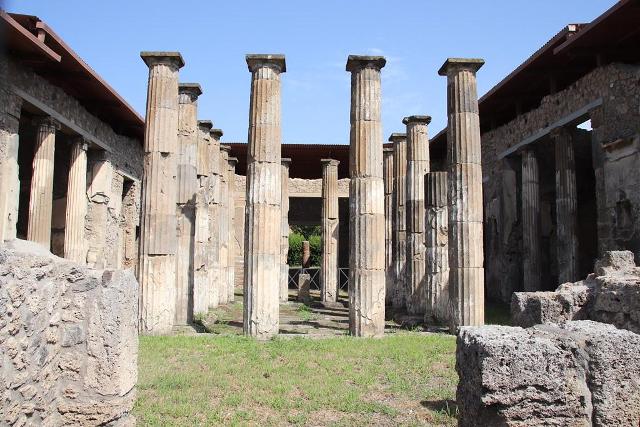
Starting with the most impactful event, in 79 AD, Mount Vesuvius erupted with devastating force, permanently altering the landscape and history of the region around the Bay of Naples. This eruption is one of the deadliest volcanic events in European history. It spewed ash, pumice, and gases high into the atmosphere, burying Pompeii, Herculaneum, and several other settlements under meters of volcanic material. The cities remained lost for nearly 1,700 years until their rediscovery in the 18th century, offering an unparalleled archaeological window into Roman life. The tragedy of Vesuvius reminds us of nature’s immense power and the fragility of human civilization.
Moving forward to the medieval period, August 24, 1572, witnessed the St. Bartholomew’s Day Massacre in France. This event was a brutal turning point in the French Wars of Religion, where thousands of Huguenots (French Protestants) were killed in Paris and across the country. It began with targeted assassinations and escalated into widescale violence that deeply affected European political and religious dynamics for decades. The massacre highlighted the intense religious conflicts of the era and is often studied as a stark example of sectarian violence.
Fast-forwarding to the modern era, August 24, 1814, marks a moment of turmoil during the War of 1812 between the United States and Britain. On this day, British forces captured Washington D.C. and set fire to several key buildings, including the White House and the Capitol. This dramatic act was in retaliation for the American burning of York (modern-day Toronto) earlier in the war. The burning of the capital shocked the young nation but also galvanized American resolve to continue fighting. The event remains a symbolic moment in U.S. history reflecting vulnerability and resilience.
In scientific achievements, August 24, 1949, saw the adoption of the German Basic Law (Grundgesetz), which laid the foundation for the Federal Republic of Germany (West Germany). This constitution was essential in rebuilding democratic governance after the devastation of World War II and the fall of the Nazi regime. The Basic Law emphasized human rights, rule of law, and federalism, serving as a model for democratic reconstruction worldwide. Its adoption represented hope and renewal for a war-torn Europe.
Additionally, August 24, 1991, stands out as a pivotal day in the modern geopolitical landscape when Ukraine declared its independence from the Soviet Union. This declaration was a critical step in the dissolution of the USSR and the reconfiguration of Eastern Europe’s political boundaries. Ukraine’s independence has had significant implications for regional and international relations, continuing to resonate in contemporary global affairs.
August 23 and 24 offer a rich tapestry of historical events that have shaped the world in profound ways.
More like this:





- Most Popular



- Top Stories



- Most Recent