Why January is Named After Janus, the God of Beginnings
January isn’t named for snow, cold, or a fresh calendar page. It’s named for a Roman god with two faces.
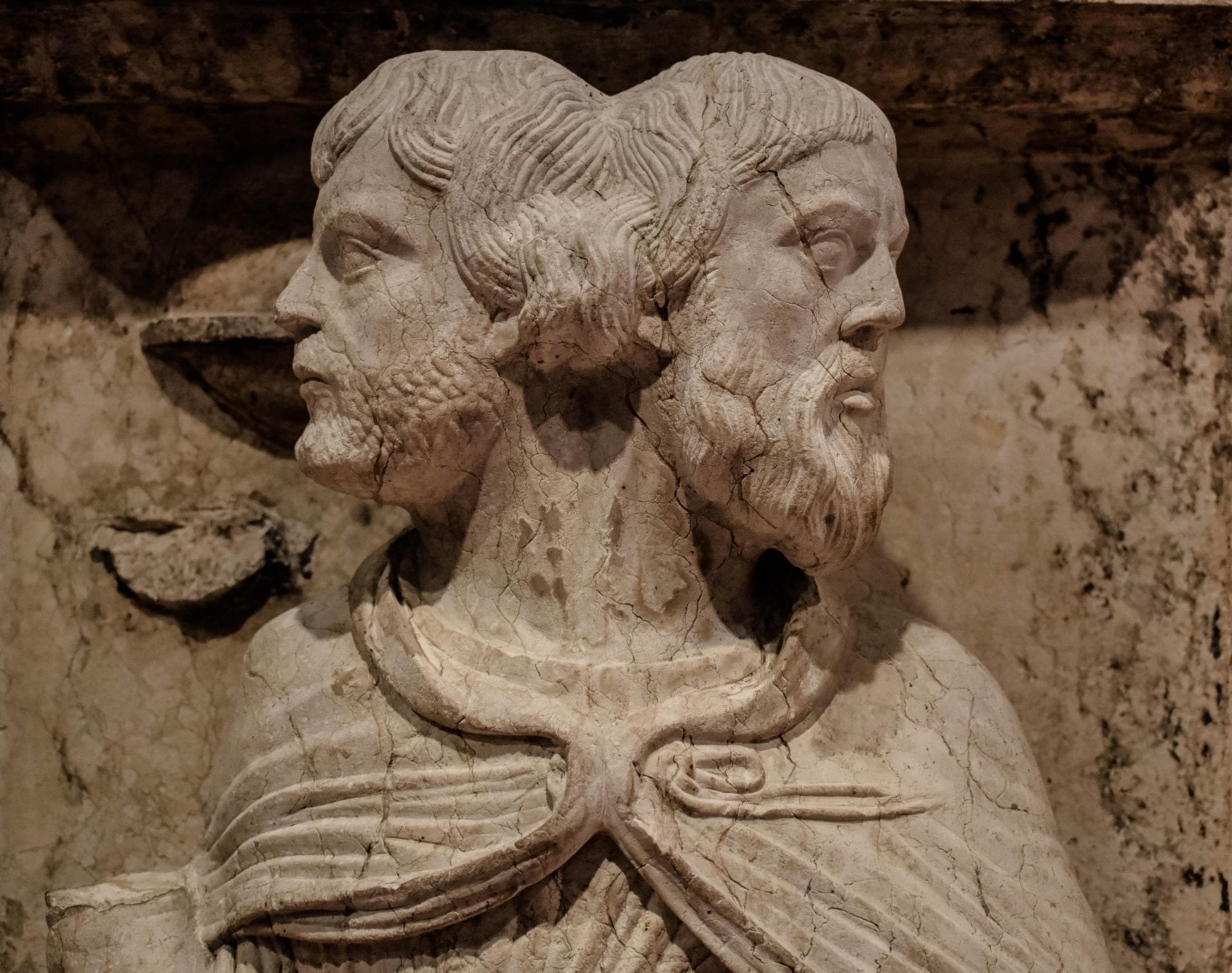
January isn’t named for snow, cold, or a fresh calendar page. It’s named for a Roman god with two faces.
Get The Latest News!
Don't miss our top stories and need-to-know news everyday in your inbox.
That detail sounds like a myth trivia question, but it explains something most people feel every year: January is a month of looking back and looking forward at the same time. The Romans built that idea into the name itself by linking the month to Janus, the god of beginnings, gates, and transitions.
The god behind the name
Janus (pronounced JAY-nus) was an important figure in ancient Rome. Unlike many Roman gods borrowed from Greek mythology, Janus was distinctly Roman. He was not mainly a war god or a love god. His job was simpler and more practical: he watched over change.
Janus was associated with:
- Beginnings and endings
- Doorways and gates
- Crossroads and choices
- Transitions, like moving from peace to war, or from one year to the next
He’s usually shown with two faces. One looks to the past, the other to the future. That image wasn’t meant to be creepy. It was meant to be useful: when you step through a door, you leave one space and enter another. You need awareness of both.
That “two-direction” mindset is exactly what people do in January, even now. We check last year’s photos, bills, and goals. Then we set new plans. That’s Janus in everyday form.
Why the Romans cared so much about “beginnings”
Rome was a culture built on rituals. The Romans believed starts mattered. If you began something the right way, you improved the chances it would go well. That idea shaped everything from politics to family life.
Janus became the god you honored at the start of almost anything important:
- A new public office term
- A military campaign
- A marriage or major journey
- Even daily routines, in some households
Ancient prayers often invoked Janus first, before other gods. In a sense, he was the “opening act” of Roman religion. If you wanted access to the rest, you went through him—like a gatekeeper.
That role makes his connection to the first month feel natural. A new year is the biggest “start” on the calendar.
How January got its place at the front of the year
Here’s the part that surprises many people: January wasn’t always the first month.
Early Roman calendars began in March, which is why some month names don’t match their numbers:
- September comes from septem, Latin for “seven”
- October from octo, “eight”
- November from novem, “nine”
- December from decem, “ten”
Those names only make sense if March is month one.
So how did January move to the front?
Over time, Roman leaders adjusted the calendar for political and practical reasons. One major shift happened when January 1 became the start of the civic year, tied to the beginning of terms for certain officials (consuls). If your government resets at a certain time, the calendar tends to follow.
By placing January first, Rome symbolically put Janus at the gate of the year.
Later reforms, including Julius Caesar’s calendar changes, helped lock in the structure that eventually shaped the modern calendar used in much of the world today. The name “January” comes from Latin Ianuarius, meaning “month of Janus.”
Janus: not just “two-faced” in the insulting way
In modern English, calling someone “two-faced” is an insult. It means they act friendly to your face but dishonest behind your back.
Janus is where that phrase often gets linked, but it’s a misunderstanding. Janus wasn’t about deception. His two faces represented dual awareness:
- past and future
- inside and outside
- before and after
That’s a useful idea, not a moral flaw.
You can still see this positive version of “two-faced” thinking in normal life. A coach reviews last season’s mistakes while planning the next. A student looks at last semester’s grades while choosing a new study routine. A manager checks last quarter’s numbers before setting targets.
That’s Janus energy: learn from what was, prepare for what’s next.
Doors, gateways, and the hidden meaning in “January”
Janus wasn’t only about time. He was also the god of doors—literally.
The Latin word ianua means “door,” and it’s related to Janus’s name. That link matters because it shows how Romans thought about change. A door is a simple object, but it captures a big idea:
- You can’t be in two rooms at once.
- You must cross a line to enter something new.
- Every entrance is also an exit.
January works the same way. It’s a doorway month. Even people who don’t care about New Year’s traditions still feel the “threshold” effect: new budgets, new schedules, new school terms, new work plans, new gym routines.
The month’s name quietly reinforces the idea that you’re stepping through a gate.
Traditions that echo Janus without saying his name
Modern New Year customs often match Janus’s themes, even when they come from different cultures or religions.
Looking back
Many people use late December and early January for reflection:
- reviewing photos and messages
- cleaning out closets
- checking finances
- thinking about what worked and what didn’t
That’s the backward-looking face of Janus.
Looking ahead
Then comes the forward-looking side:
- resolutions
- vision boards
- goal-setting apps
- planners and calendars
- new routines
Even the simple act of writing the new year on paper has a symbolic feel. It’s a small ritual of crossing into the future.
The “fresh start” effect
Psychologists sometimes talk about the “fresh start effect”—the idea that certain dates motivate change because they feel like clean breaks. January 1 is the biggest example in many countries. Whether or not you know the myth, the calendar creates a mental doorway.
Janus would understand that perfectly.
Where you can spot Janus in modern language and symbols
Janus shows up in more places than you might expect.
- January itself is the obvious one.
- The word janitor is sometimes said to come from the same root idea of guarding entrances (though the language history is more complex, the connection to doors and access is a common explanation).
- The image of a two-faced figure appears in art and architecture as a symbol of transitions.
- The idea of “standing at a crossroads” is a Janus-style moment, even if the phrase doesn’t name him.
You can also see Janus’s influence in how people talk about the new year. Common sayings like “turning over a new leaf” or “starting fresh” carry the same meaning: close one chapter, open another.
Practical ways to use the Janus idea in your own year
Janus isn’t just a fun origin story. His symbolism offers a simple method for handling change without getting stuck in either regret or unrealistic optimism.
Try a “two-face check-in” for January:
Look back with precision, not drama.
Pick one thing you did well and one thing you want to improve. Keep it specific.Look forward with a plan, not a wish.
Instead of a vague resolution like “get healthier,” choose a small action you can repeat.Use thresholds on purpose.
Doors and gates work because they mark a boundary. Create one: a new notebook, a new calendar system, a cleaned workspace, or a scheduled reset day each month.Accept that change is a passage, not a switch.
Walking through a doorway takes a step. Big changes usually do too.
This approach fits the spirit of Janus: respectful of the past, focused on the future, and honest about the transition in between.
A month named as a reminder
January carries a myth in plain sight. Every time the month’s name appears on a phone screen, a bill, or a school schedule, it repeats the same message the Romans built into their calendar: beginnings matter, and they work best when you face both directions.
Janus isn’t asking anyone to worship a Roman god. He’s offering a picture of how change actually feels. One face holds memory. The other holds possibility. January stands at the doorway, inviting you to step through with both in view.
More like this:



- Most Popular



- Top Stories



- Most Recent