


Why the Summer Solstice Brings the Longest Day, Not the Hottest One
The astronomical event marks the year’s longest stretch of daylight and helps explain why peak summer heat often arrives weeks later.

The longest day of the year is not the hottest. That surprise sits at the heart of the summer solstice, a moment people often notice without fully understanding.
Get The Latest News!
Don't miss our top stories and need-to-know news everyday in your inbox.
The summer solstice marks the point when one half of Earth gets its greatest stretch of daylight. In the Northern Hemisphere, it usually falls around June 20 or 21. In the Southern Hemisphere, it happens around December 21 or 22. It is not just a date on a calendar. It is an astronomical event that has shaped farming, religion, festivals, and the way people talk about light and growth.
What the summer solstice actually is
The summer solstice happens because Earth is tilted as it moves around the sun. That tilt is about 23.5 degrees. As Earth travels through space, different parts of the planet lean more directly toward the sun at different times of year.
At the summer solstice, your hemisphere is tilted most fully toward the sun. That creates the longest period of daylight and the shortest night of the year. The sun also reaches its highest point in the sky at midday.
A common misunderstanding is that the solstice means Earth is closest to the sun. It does not. In fact, the distance between Earth and the sun is not what causes the seasons. The tilt of Earth is the real reason.
Another point often gets missed. The solstice is a precise moment, not just a whole day. Calendars mark the date, but astronomers can name the exact hour and minute when it occurs.
Why it matters beyond astronomy
The summer solstice has long been easy to notice, even without modern science. If you watch where the sun rises or how long the light lasts, the pattern becomes clear. Days grow longer for months, then seem to pause. The word “solstice” comes from Latin words that mean “sun” and “to stand still,” because the sun’s position appears to stop changing for a brief time before reversing direction.
For people who depended on the land, this mattered. Long before digital clocks and weather apps, the sky was a practical guide. The solstice helped people track the year, time planting and harvesting, and organize religious or community events.
Even now, people feel its effects in ordinary ways. Children may stay outside later. Commutes happen in bright evening light. Parks, patios, and public spaces stay busy longer. You may not think about Earth’s tilt while walking home at 9 p.m., but you are experiencing the solstice’s reach.
Why the hottest days come later
This is one of the biggest points of confusion. If the summer solstice brings the most sunlight, why do the hottest days often arrive weeks later?
The answer is simple. Land and water take time to warm up. They absorb more energy than they release around the solstice, so heat keeps building after the longest day has passed. This delay is called seasonal lag.
A similar thing happens with daily temperatures. Noon is when the sun is highest, but the hottest part of the day usually comes later in the afternoon. The ground and air need time to respond.
That is why the solstice is better understood as a light milestone than a heat milestone.
Ancient markers and human attention
The summer solstice has inspired impressive structures and rituals. Stonehenge in England is one famous example. Many people gather there to watch the sunrise align with the stones. Other ancient sites around the world were also built with attention to the sun’s movement.
These places remind us of something important: people paid close attention to the sky because it mattered for survival, order, and meaning. The solstice was not abstract. It was visible, repeatable, and powerful.
You do not need a stone monument to understand this. Stand in the same spot at sunset for a few weeks before and after the solstice. Notice where the sun drops below the horizon. It shifts, then seems to pause, then moves back the other way. That small observation connects modern life to an old human habit: watching patterns and giving them meaning.
Cultural traditions linked to the solstice
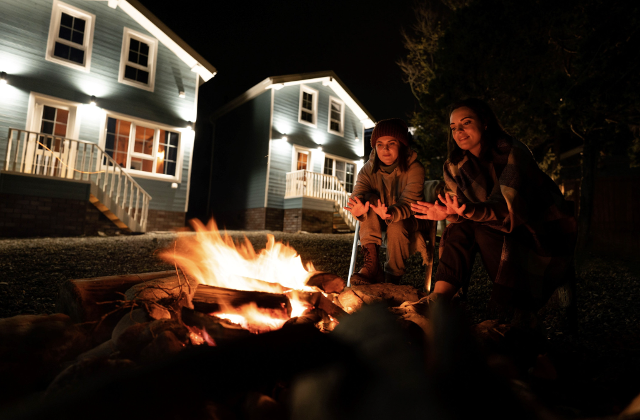
Many cultures celebrate the summer solstice with bonfires, dancing, music, feasts, or gatherings outdoors. In parts of Northern Europe, Midsummer traditions remain especially strong. Sweden’s Midsummer, for example, includes flower crowns, dancing around a maypole, shared meals, and time spent in nature. Finland often marks the occasion with lakeside fires and long evenings outdoors.
In Latvia, the Jani festival brings songs, bonfires, and special foods. In some traditions, herbs and flowers gathered around the solstice are thought to hold special power. These ideas connect the solstice with growth, fertility, and abundance.
In parts of the world with Indigenous traditions, solstice observances may carry spiritual meaning tied to balance, gratitude, and the relationship between people and the natural world. These traditions vary widely and should not be treated as one single story. Still, they often share a deep attention to cycles of light and life.
Modern celebrations can be less formal but still meaningful. Cities host yoga events at sunrise. Museums and historical sites organize solstice programs. Friends meet for late dinners or evening walks simply because the light lasts longer.
Sayings, symbols, and common misunderstandings
The phrase “midsummer” often confuses people. If this is the start of astronomical summer in some calendars, why call it midsummer? The answer lies in older seasonal systems. In some traditions, the solstice falls near the middle of the warm growing period, not the beginning of it.
There is also a symbolic side to the solstice. Light often stands for clarity, hope, energy, or celebration. The longest day can feel like a natural high point. At the same time, the solstice also marks a turning point. After it, daylight slowly begins to shorten again. That gives the event a double meaning: fullness and change arriving together.
That mix shows up in art, poetry, and everyday language. People speak of a “high-water mark” or a “peak moment.” The solstice fits that idea. It is a peak that also reminds us that peaks do not last forever.
How to notice the solstice in your own life
You do not need special equipment to recognize the summer solstice. A few simple habits can make it easier to see.
Pay attention to shadows. Around the solstice, midday shadows are at their shortest for the year in your hemisphere.
Notice sunrise and sunset positions. The sun rises and sets farther north on the horizon near the summer solstice in the Northern Hemisphere, and farther south in the Southern Hemisphere.
Track evening light. If it feels unusually bright late in the day, that is the solstice season showing itself in a practical way.
Look at your routine. Do people in your area walk later, eat outside more, or spend more time in public spaces after work? The solstice shapes social life as much as the sky.
Try a simple observation project. Take a photo from the same place at the same time each week. Over several weeks, you will see the light change in a way that is more striking than most people expect.
Why the solstice still matters
It is easy to think of the summer solstice as a fact for trivia nights or school science lessons. But it remains relevant because it links science, culture, and daily life in one clear event. It explains why daylight stretches so far. It helps us understand the rhythm of the year. It also shows how human beings turn natural patterns into meaning.
The summer solstice is both exact and personal. Astronomers can measure it down to the second. At the same time, anyone can feel it in a bright late evening, a short shadow, or a crowded park after dinner. That combination may be why the solstice still holds attention. It is a reminder that some of the biggest forces shaping life are also the easiest to see once you know where to look.
More like this:


- Most Popular



- Top Stories



- Most Recent

- Sign In
- Home
- Video
- News
-
Weather
 Sponsored by Michael Ryan Exteriors - Roofing Professionals
 - Sports
- Obits
- Events
- Radio
- AP News
- Shop Local
- Classifieds
- Autos
- Real Estate
- Directory
Get the RiverBender App


Follow Us
Copyright © 2026 RiverBender.com All rights reserved.
primary