


Without investing in treatment, we cannot turn the tide of the opioid epidemic

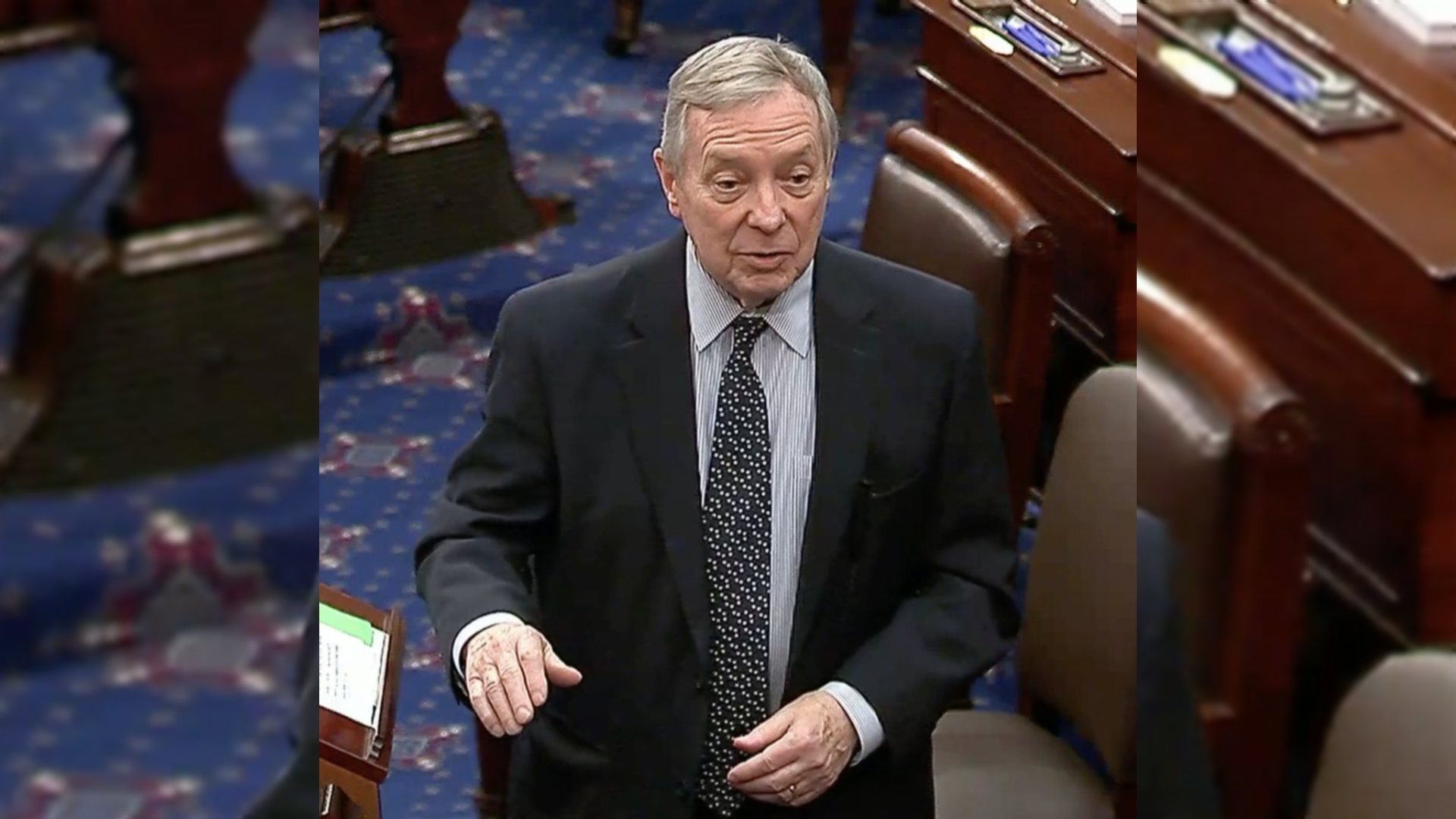
WASHINGTON, DC – With the Senate debating legislation to combat opioid and heroin abuse, U.S. Senator Dick Durbin (D-IL) said on the Senate Floor this morning: “There is no town too small, no suburb too wealthy not to have been touched by heroin overdoses and deaths.” The Comprehensive Addiction and Recovery Act – which was passed unanimously out of the Senate Judiciary Committee earlier this month and which Senator Durbin is cosponsoring – provides for a community-based response to heroin and opioid addiction that that involves law enforcement, the criminal justice system, the public health system and the recovery support community. More information is available here.
Get The Latest News!
Don't miss our top stories and need-to-know news everyday in your inbox.
Durbin highlighted the efforts of local leaders in Dixon, Illinois to combat the heroin epidemic. In November, Durbin met with Dixon Police Chief Danny Langloss and Lee County Sheriff John Simonton to learn more about the Safe Passage Initiative that encourages addicts to seek out treatment for addiction. After the program was initiated, “the jail was empty because it had been filled by petty criminals stealing, burglarizing, and trying to feed their habits. Now they were in rehab, so it made a safer community and at least gave them a chance to straighten out their lives.”
While discussing the importance of better treating people suffering from addiction – rather than arresting them or turning them away from help – Durbin spoke about an amendment he has filed to the bill that would expand access to substance abuse treatment under Medicaid.“We decided a number of years ago, for fear that we would be warehousing patients, to limit substance abuse treatment facilities under Medicaid to no more than sixteen beds. Sixteen beds may work in a rural area. It certainly doesn’t work in the City of Chicago.”
This amendment would modify the Medicaid Institutions for Mental Disease (IMD) Exclusion policy – a decades-old policy that limits Medicaid coverage of services provided by facilities that specialize in mental health and substance abuse treatment. As a result, the policy has had the unintended consequence of limiting addiction treatment for at-risk populations. The amendment also establishes a new $50 million youth inpatient addiction treatment grant program to fund facilities that provide substance use disorder treatment services to young, underserved, at-risk Medicaid beneficiaries, with an emphasis on rural communities. More information on this amendment – which is based on legislation introduced by Durbin and U.S. Senator Angus King (I-ME) – is available here.
Video of Durbin’s floor speech is available here.
Durbin has also filed three additional amendments to the Comprehensive Addiction and Recovery Act currently being debated on the Senate Floor:
- Requiring Better FDA Oversight of Opioids: In February, the Food and Drug Administration (FDA) announced a comprehensive action plan to enhance patient safety, improve prescriber education, and strengthen expert review panels for opioids. This amendment would make permanent four reforms to limit how new opioid products come to market by requiring the FDA to: convene an FDA Advisory Committee to approve new drug applications for opioids; convene an FDA Pediatric Advisory Committee to make recommendations regarding a framework for pediatric opioid labeling before any new labeling is approved; develop recommendations on what continuing medical education program prescribers of opioids should be required to take, and how often; and, issue guidance on approval standards for generic abuse-deterrent formulations of opioids.
- Improving Prescription Drug Monitoring: Prescription narcotic drugs are the number one cause of overdoses in the United States. Nearly every state, including Illinois, has a prescription drug monitoring program (PDMP) to track overutilization of certain drugs; however, many states’ prescription drug monitoring programs are underutilized and there are disparities in the reporting between these systems. This amendment would encourage states to maintain, improve, and expand their prescription drug monitoring programs by requiring prescribers to consult PDMPs before issuing new prescriptions, requiring dispensers to input data into the PDMP within 24 hours, authorizing access to PDMPs for state prescriber and dispenser licensing boards, and providing proactive informational reports to licensing boards and individual prescribers to enhance accountability in prescribing patterns.
- Transparency of Opioid Quotas: Although the Drug Enforcement Agency currently sets public quotas regarding how many total opioids are annually manufactured in the United States, the quota for each individual manufacturer is not public. This amendment would providing greater transparency of opioid manufacturing quotas so that lawmakers, the medical community, and the public can better understand opioid prescribing and abuse.
Since 1999, the number of drug overdose deaths in the United States has more than doubled, and in most states the number now exceeds the number of traffic-related deaths. Drug overdose deaths are now the leading cause of preventable injury death, resulting in nearly 44,000 deaths each year, with most involving either prescription opioids or heroin. In Illinois, there were 1,652 overdose deaths in 2014 – an increase of nearly 29 percent since 2010.
More like this:




- Most Popular



- Top Stories

- Most Recent

- Sign In
- Home
- Video
- News
-
Weather
 Sponsored by Michael Ryan Exteriors - Roofing Professionals
 - Sports
- Obits
- Events
- Radio
- AP News
- Shop Local
- Classifieds
- Autos
- Real Estate
- Directory
Get the RiverBender App


Follow Us
Copyright © 2026 RiverBender.com All rights reserved.
primary