
FRANKFURT, Germany (AP) — Volkswagen's sweeping restructuring underlines the force of the China shock hitting Germany's economy as the world's biggest car market, short years ago a major profit center, rapidly becomes a major competitive challenge.
The stiff headwinds from China facing Germany's largest carmaker helped break a logjam on the board of directors and convince employee, union and local government officials that Volkswagen needed rapid change. The plan announced Thursday will include the loss of 50,000 jobs and probably four German auto plants where manufacturing costs can no longer compete.
Get The Latest News!
Don't miss our top stories and need-to-know news everyday in your inbox.
Board members representing employees had rejected CEO Oliver Blume's plan in July, and Volkswagen’s worker-friendly structure, with employee representatives holding half the board seats and the local government of Lower Saxony two, had raised doubts about whether Blume could push through his plan.
The board decision was a “much better than feared outcome,” wrote Deutsche Bank analysts on Friday. While it doesn’t solve VW’s challenges overnight, “it removes one of the biggest investor concerns: whether the company is still capable of making the difficult decisions required to address them.” Volkswagen shares rose 8% Friday on the news.
They said it could have a “halo effect” on other German manufacturers and encourage them to make similar difficult adjustments.
Blume has pointed to the turbulence hitting the company in China, where rapid change is overtaking a market where before the pandemic Volkswagen earned a large chunk of its profits. Dozens of Chinese competitors have launched 500 new models just this year, into a market where sales have declined over 20% and prices have fallen.
The Chinese auto sector has benefited from government support for electric autos and is marked by ferocious competition, low costs and rapid adoption of new technology. While German sales in China have fallen, Chinese carmakers BYD, Geely and Chery have started to take market share in Europe.
That has spread anxiety throughout German industry and the electorate. The German economy — Europe’s biggest — has stagnated for several years, shrinking in 2023 and 2024 and showing only 0.2% growth last year. Although the unemployment rate of 4% is lower than the EU average, Germans can see the unsettling headlines about job reductions at companies that have defined the German economy for decades: 50,000 at Volkswagen, with media reports of plans for more; 8,000 buyouts at BMW by the end of next year; and a reduction of 13,000 at auto technology firm Bosch by 2030.
China now produces many of the complex goods that Germany specializes in. Trade figures show that since last year, China sold more industrial goods such as cars, trucks, locomotives, and medical device to Germany than Germany sold to China.
The headwinds for Volkswagen are a "warning sign for the entire German automobile industry," said Stefan Bratzel, director of the Center of Automotive Management (CAM) in Bergisch Gladbach. "Volkswagen as a volume manufacturer has the biggest problem, but also Mercedes and BMW have to cut costs and have the challenge of transforming the whole industry.”
“What we see now is a fundamental crisis of Volkswagen and other incumbents of the automotive industry," he said. "It’s technological change, it is a change with new players coming into the automotive universe.”
VW has also been hit by higher U.S. tariffs on cars imported from Europe. It faces a 15% tariff on cars from Europe and up to 27.5% on cars imported from its plants in Mexico. Volkswagen’s profits fell by 31% in the first half of the year to 3.1 billion euros ($3.6 billion), even though outside of China it sold more cars worldwide than the same period last year.
It has set up a design center in Hefei to develop vehicles tailored to the Chinese market, under an “in China, for China” strategy.
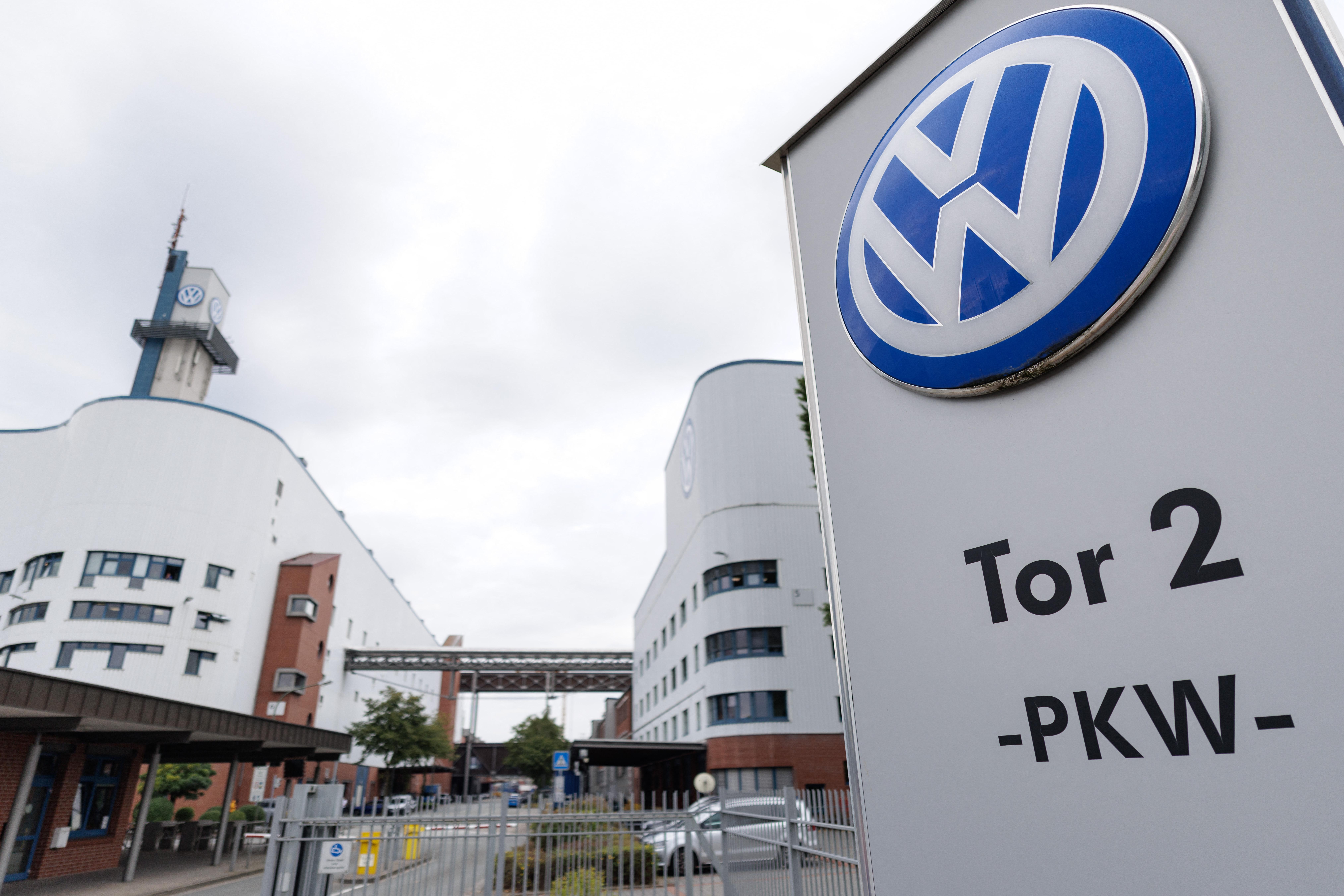
Volkswagen said that “currently” it plans to phase out production over 2031-34 at four plants, in Emden, Zwickau, Hannover und Neckarsulm, saying that it could not foresee cost-competitive production of new models there past those dates. The plant-closing decision however was softened by the long lead time and by pledges that controversial site decisions would be worked out later, with alternative uses to be considered.
The company also said it would halve the number of models across its different brands from around 150 to 75. That would mean higher volumes per model, lowering fixed costs.
The job cuts would include management personnel as well as assembly line workers and would be accompanied by streamlining of management structures to speed decision-making.
Volkswagen, which has some 650,000 employees, is already in the process of reducing headcount under an earlier restructuring. In an online Q&A on the company's website from Aug. 21, Blume said that the company had already signed 37,000 contracts to reduce headcount under that set of cost cuts, mainly through early retirement.
In addition to the core Volkswagen brand, its other nameplates include Audi, Skoda, Porsche and SEAT.