MADISON, Wis. (AP) — Even though he was nearly 2,000 miles from where he'd grown up, Ryan Hopkins felt right at home as a quarterback prospect visiting Wisconsin.
“I felt the energy from the city,” said Hopkins, a former three-star recruit from Mater Dei in Santa Ana, California. “I felt the energy from the coaches.”
Get The Latest News!
Don't miss our top stories and need-to-know news everyday in your inbox.
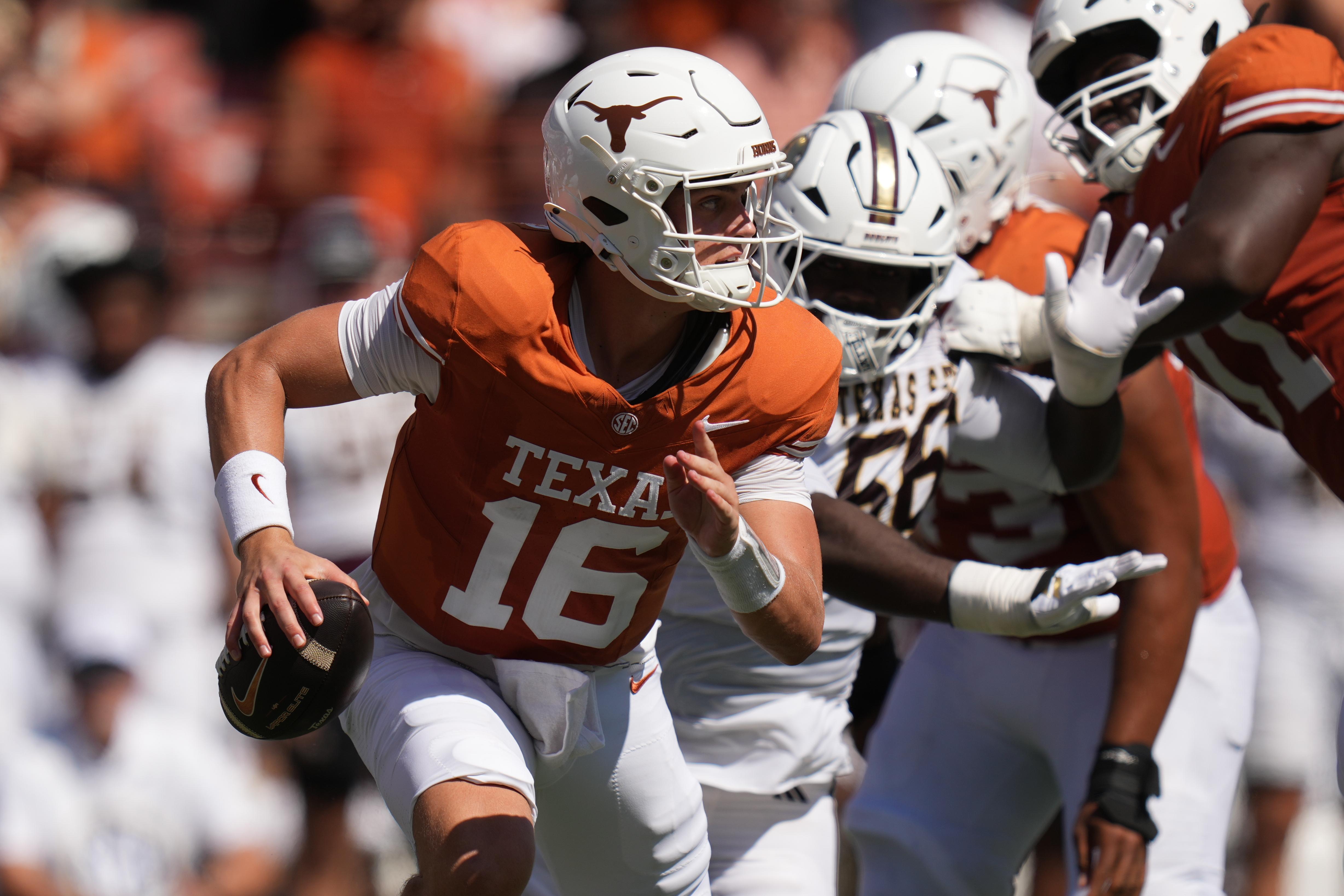
But there was a complication that went beyond the distance factor. Hopkins had to deal with the dilemma facing just about every high school quarterback prospect since most Bowl Subdivision programs now overwhemingly rely on transfers at that position: About 65% of the FBS starting quarterbacks to open this season transferred at some point in their careers.
“It’s a totally different ballgame,” said Trent Dilfer, who has experienced quarterback recruiting from just about every angle.
Dilfer is a former Fresno State quarterback and first-round draft pick who started for the Baltimore Ravens’ Super Bowl championship team in the 2000 season. He coached a high school power at Lipscomb Academy in Nashville, Tennessee, was a college head coach at UAB and now is back at Lipscomb.
He remembers when a quarterback coming out of high school could learn on the job. Colleges don’t need to be that patient anymore because so many college quarterbacks with starting experience are available each year since the NCAA erased the requirement of sitting out a year before the 2021-22 season.
“And that changed everything,” Dilfer said. “Because instead of recruiting the child, now you’re recruiting a man.”
Hopkins chose Wisconsin even as the Badgers enter a fourth straight season with a transfer as their starting quarterback. Hopkins spent the summer competing with Louisville transfer Deuce Adams for the right to back up Old Dominion transfer Colton Joseph, who got the start in the Badgers' season-opening loss to No. 4 Notre Dame on Sunday night.
“I feel like with this coaching staff – no matter if you’re the 2 or the 3 or the 1 - they're coaching every guy the same,” Hopkins said.
The reliance on transfers by most major programs leaves fewer roster spots available for high school prospects.
“If you’re a quarterback in this day and age, you have to earn it and you have to say, ‘I’m OK with taking less when I’m first getting recruited, because I want to get more when I show how good I am,’” Washington coach Jedd Fisch said.
They also must realize the college they select out of high school might not be where they finish.
Going by composite rankings of recruiting sites compiled by 247Sports, more than 80% of the top 50 quarterbacks from the 2023 class have transferred. The number of top-50 quarterbacks from that class who have attended at least three colleges is nearly double the total who stayed at one school.
“A kid who used to be able to go to a middle-of-the-road SEC or ACC school, it’s probably better for them to go now to a Group of Five school and play,” said Bryant Appling, who coaches Georgia high school power Buford. “Because two years from now, when they want to transfer or move up, they’ll have a leg up on the kid who’s just coming out of high school and who they’re not sure of.”
All that activity makes it tough for high school quarterbacks who sign with colleges in December, just before the transfer portal window opens. Most finalize their college plans several months before that December deadline, when they have no idea who they might be competing against once they’ve enrolled.
“You’re fishing in the dark, so to speak,” said Jason Negro, the coach at St. John Bosco in Bellflower, California, whose list of former quarterbacks includes Illinois’ Katin Houser and 2018 first-round pick Josh Rosen. “You have no control over it. You might look at a roster in November or December - and in January it looks completely different.”
College coaches won't stop recruiting high school quarterbacks entirely, since they'd prefer to develop multi-year starters rather than depending on the portal each year. But the portal enables them to be choosier.
“If you’re going to invest in somebody to play at this level, they’d better be able to play in year one or at least year two,” Wisconsin coach Luke Fickell said.
Coaches also rarely sign multiple high school quarterbacks in the same class anymore. Rutgers coach Greg Schiano noted that “back in the day, if you were a little bit low in that room, you wouldn’t think twice about doing that.”
Some quarterbacks have been proactive by reclassifying to enter college a year early, enabling them to profit off the use their name, image and likeness sooner.
Teddy Jarrard is at Notre Dame this year rather than playing his senior season at North Cobb High School in Kennesaw, Georgia. Notre Dame also has a verbal commitment from Champ Monds, who skipped his junior season at Vero Beach (Florida) High and will begin his college career next year. Colorado’s Julian Lewis also reclassified.
“Some guys are ready to do that,” Schiano said. “They’re physically mature enough. They’re emotionally mature enough. Other guys, not even close.”
While the transfer portal hinders high school quarterback prospects initially, it offers potential long-term benefits. Quarterbacks not recruited heavily in high school can work their way up.
“If they just get in there and play, even at the I-AA level, you’ve seen guys who have made big strides come up,” Duke coach Manny Diaz said. “We’ve seen D-II guys that in the past might’ve just been stuck there forever and no one would have ever known about them.”
Diego Pavia went from New Mexico Military Institute to New Mexico State to Vanderbilt and became the 2025 Heisman Trophy runner-up. Trinidad Chambliss started out at Division II Ferris State, led Mississippi to a College Football Playoff semifinal berth last year and is back behind center for the Rebels this season.
Chambliss is one of at least 18 FBS starting quarterbacks this season who spent part of their careers at non-FBS programs.
“I have a really good friend whose son is a really great quarterback and is asking where he should go,” Nebraska coach Matt Rhule said. “I was like, ‘I’d go to the place where I could start. I’d go FCS. I’d go wherever and play,’ because everyone’s going to want to see a quarterback with experience.”
Chris McDonald, who coached Washington’s Demond Williams and Oklahoma State’s Broderick Vehrs at Basha High in Chandler, Arizona, said quarterbacks are now similar to baseball prospects moving up a farm system. Productive quarterbacks at lower-level schools get opportunities at bigger programs.
“Understand your recruitment really doesn’t end until you’re going into your last year of college,” McDonald said.
Hopkins, the Wisconsin quarterback, offers this advice to high school QB recruits.
“Trust your development,” he said. “Your development’s huge. I think a lot of kids, they’re really eager and they want to go to these really flashy programs because these coaches are throwing a lot at them. See yourself, be self-aware of your talents and what you’re capable of."
___
AP sports writers Aaron Beard and Stephen Hawkins contributed to this report.
___
Sign up for Top 25 poll alerts here, visit the Top 25 here and see AP’s full college football coverage here