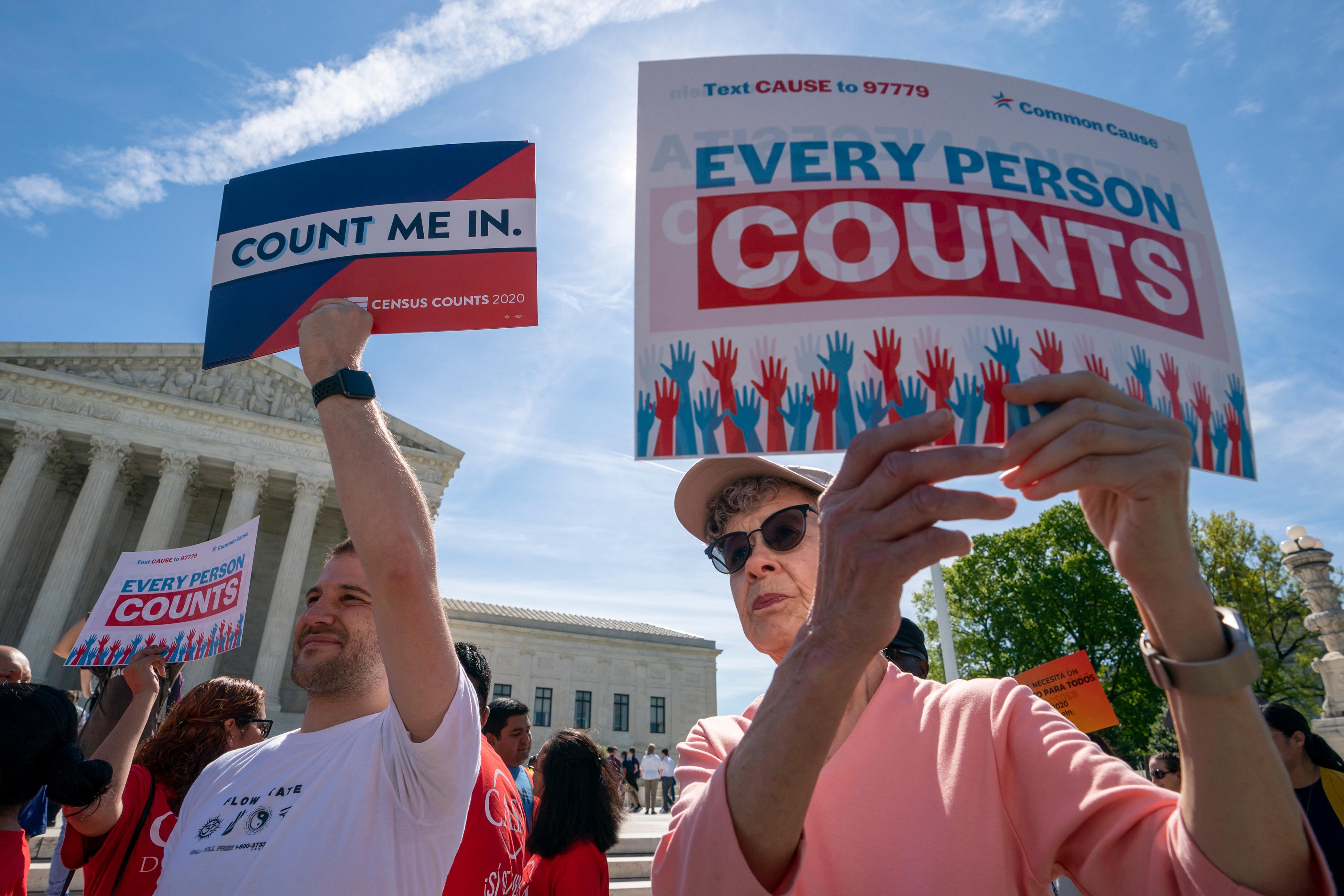
The Trump administration is proposing a dramatic overhaul of the once-a-decade U.S. Census head count that could leave out millions of immigrants based on status and key racial and ethnic data, jeopardizing the allocation of resources and the country's voting map.
The potential changes, announced Wednesday, would exclude undocumented immigrants, asylum seekers and anyone without permanent status. Certain demographic questions from the traditional questionnaire would also be eliminated.
Get The Latest News!
Don't miss our top stories and need-to-know news everyday in your inbox.
It echoes Trump's previous idea to add a citizenship question to the 2030 census.
The U.S. Census Bureau, in a post on the Federal Register website, argued “illegal aliens (among others) should not be included in the apportionment count, as they are not true inhabitants, members of the body politic, or persons with a ‘usual residence’ in the United States due to their lack of a sufficient tie and allegiance to the United States.”
The census also “should be colorblind and should not be distorted in any way by questions about immaterial personal characteristics, such as race,” the agency said. It also is considering nixing questions related to people who identify as part of the LGBTQ+ community.
These changes would harm the quality of the data, said Beth Jarosz, a data researcher and vice president of the Association of Public Data Users. She called the proposals "unprecedented."
“Not counting all of the people who reside here is actually where the real threat is,” Jarosz said. “If you think about all of the ways that census data are used."
Census figures are traditionally used for an “apportionment count” to determine how many seats each state will have in the U.S. House of Representatives. That count also determines the number of votes in the Electoral College.
“You can imagine if we have undercounts or if we have people counted in the wrong place,” Jarosz said. “Then their political power or their political representation gets diluted.”
Historically, the decennial census has not sought to conduct a full count of people by citizenship status, she added. It may come up in the Census' periodic American Community Survey.
Getting an accurate count of immigrants of various statuses is useful when assigning resources for public health emergencies or natural or human-made disasters.
“If you don't have a count of everyone who's there, you're not going to have the resources you need,” Jarosz said. “And that puts everybody at risk.”
Race-related questions have been on the once-a-decade census since 1790. Starting in 2000, the U.S. census began allowing people to identify by more than one race. A 2015 Pew Research Center study found that multiracial people in the U.S. were growing at a rate three times faster than the general population. By 2020, 33.8 million people in the U.S. identified as being more than one race, according to the census.
Race and ethnicity data is essential for researchers who gauge discrimination, crime rates and wealth gaps in communities of color.
Manjusha Kulkarni is co-founder of Stop AAPI Hate and executive director of AAPI Equity Alliance, two advocacy groups that rely on census counts of Asian Americans and Pacific Islanders. The proposed changes would have tremendous impact on the populations they serve, she said.
“It also seeks to exclude important demographic data from millions that enables lawmakers, health care providers, public safety officials and community advocates — really anyone who cares about the health, safety and well-being of all Americans — from having the necessary data to keep us safe and healthy,” Kulkarni said via text message.
Dropping race and ethnicity data as well as some immigrants sends a message that these communities don't matter, she added.
Collecting data for the 2030 Census with all these missing elements would be detrimental, Jarosz said.
“These changes are like trying to land an airplane when you are in thick fog and someone has thrown paint across the front window and your instruments are also not working,” she said.