
Yemen’s Houthi rebels have seized the strategic islands of Greater and Lesser Hanish in the southern Red Sea, bolstering the Iranian-backed rebels' ability to control a key maritime shipping route.
Meanwhile, Iran says Saudi Arabia was behind Oman’s decision to postpone a meeting bringing together Iran with other regional countries to discuss the Strait of Hormuz.
Get The Latest News!
Don't miss our top stories and need-to-know news everyday in your inbox.
In Iraq, two people died and more than 100 others were injured after an ammonia gas leak at a fertilizer plant in the country’s south.
Here’s a look at the latest news in the Middle East. Full coverage can be found here.
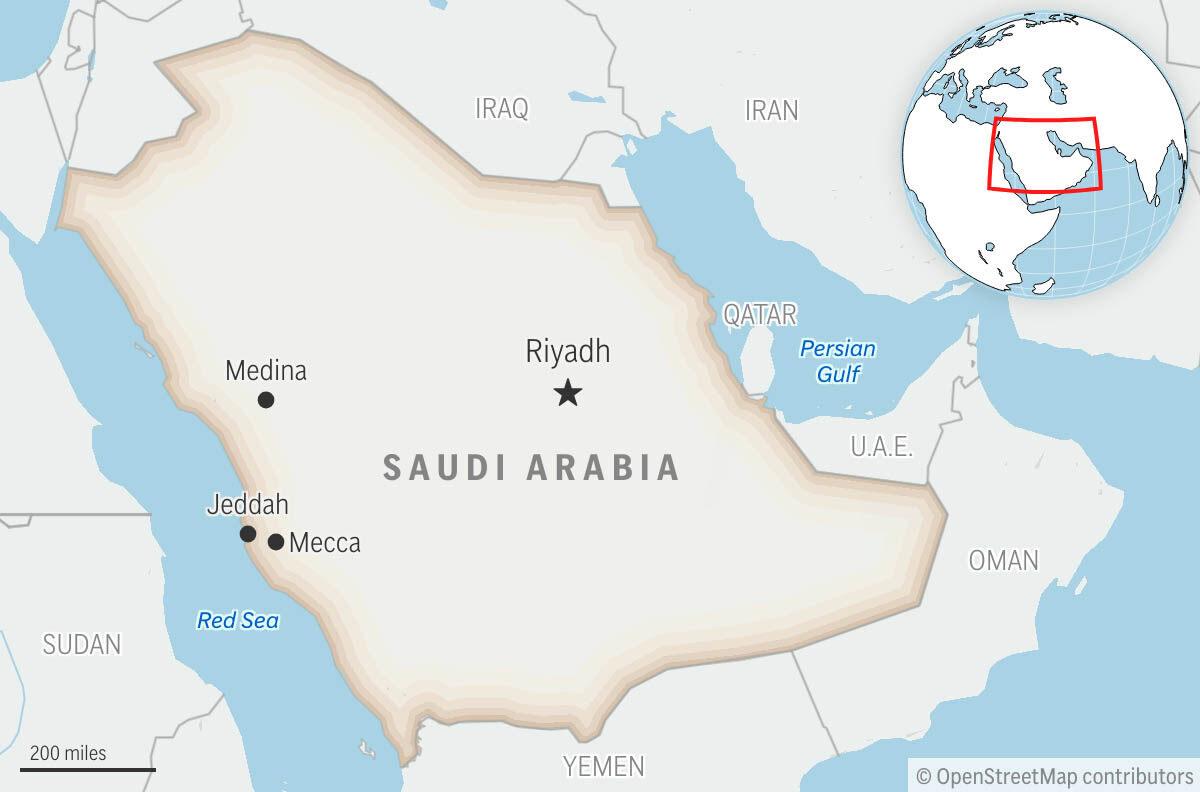
Houthi officials said Monday they had taken over the two islands just as Saudi-backed government forces tried to claw back territory from the rebels' swift advances around the Bab el-Mandeb Strait, a crucial shipping alternative to the Strait of Hormuz.
Iran effectively closed the Strait of Hormuz — through which a fifth of the world’s traded oil and gas transits in peacetime — in the opening days of the war. The Saudis have since used Bab el-Mandeb Strait that leads out of the Red Sea for crude oil exports.
The Houthis’ newest takeover, following the seizure of the Red Sea port of Mokha and a strategic island last week, puts more pressure on Saudi shipments and, in turn, global oil supplies and prices.
This could give Iran additional leverage in its war with the United States.
China, a major Middle East oil importer, on Monday called Houthi attacks on Saudi energy infrastructure “unacceptable” and said it was “deeply concerned” about further escalations by the rebels against Saudi Arabia.
Foreign Ministry spokesperson Guo Jiakun said “attacks on civilian infrastructure that is important to people’s livelihoods are unacceptable.”
He called on all sides to exercise restraint and resolve disputes through dialogue.
Iranian Foreign Ministry spokesman Esmail Baghaei said Monday Saudi Arabia had “demanded" that a meeting bringing together Iran with other regional countries to discuss the Strait of Hormuz be scrapped “for the time being.”
Baghaei called the meeting, which was to be hosted by Oman, a “proper opportunity” to restore security in the region.
The spokesman said an agreement between Iran and Oman on the Strait of Hormuz has been finalized and it will be announced later.
Saudi Arabia had submitted amendments to the agreement, citing concerns it could have lasting implications for the Strait of Hormuz, negatively impacting other Gulf Cooperation Council countries, according to a Gulf official familiar with the matter who was not authorized to comment publicly and spoke on condition of anonymity.
Iran denounced on Monday Austria’s refusal to issue visas to the Iranian nuclear chief and other delegation members for the International Atomic Energy Agency’s General Conference in Vienna, calling the decision “completely unjustified.”
Esmail Baghaei, Iran's Foreign Ministry spokesman, said Tehran summoned the Austrian chargé d’affaires, saying Austria was obligated as the host country to issue the visas.
Baghaei accused Western countries of denying Iran an opportunity to defend itself and blamed the U.S. for pressuring Austria to deny the visas.
The refusal is part of U.N. sanctions on Iran, reinstated last year, that include a travel ban on Iranian officials.
The B’Tselem human rights group said Monday Israel is carrying out a systematic and accelerated project aimed at “dismantling the foundations of Palestinian existence” in the occupied West Bank.
The group said in a new report that Israeli actions against Palestinians in the West Bank by settlers and the military are designed to undermine Palestinian collective life “while entrenching a permanent system of Jewish supremacy” across the territory.
Settler violence has surged under the ultranationalist government of Israeli Prime Minister Benjamin Netanyahu. Rights groups say the military frequently turns a blind eye to the violence, and that when it intervenes it often focuses on protecting the settlers.
The B’Tselem report also claims that Israeli actions rely heavily on open cooperation between state authorities and armed settlers who attack Palestinian communities using weapons and vehicles supplied by the state while the military either fails to prevent the violence or, in some cases, participates in it.
The report said that as of July, Israel had taken control of more than 264,402 acres (107,000 hectares) — nearly a fifth of the West Bank — through “armed settler militias.” Most of the international community views settlements as illegal.
Saudi Arabia’s Crown Prince Mohammed bin Salman met Monday with Adm. Brad Cooper, the top U.S. military commander in the Middle East, in the coastal city of Jeddah, according to the Saudi state-run news agency.
Bin Salman, who is the kingdom’s de facto ruler, discussed with Cooper “bilateral relations and the latest regional developments,” SPA reported without providing further details.
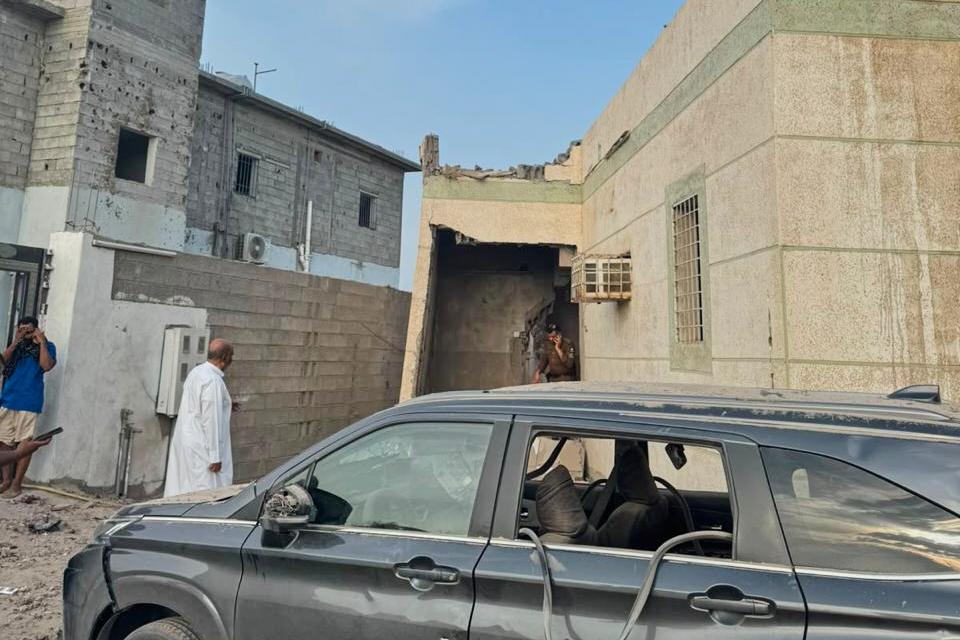
The meeting came as Saudi Arabia has been squeezed with attacks from the Iranian-backed groups in Yemen and Iraq. The Iranian proxies have recently struck oil facilities in Saudi Arabia, including an attack that shut down the country’s East-West pipeline.
Iraq’s Health Ministry said Monday an ammonia gas leak at a fertilizer plant in the southern province of Basra killed two people and injured 114 others.
Health Ministry spokesman Saif al-Badr said most of the injuries were minor, but 21 people remain hospitalized.
A crew of three were unhurt when their aircraft veered off the runway during landing at Misrata International Airport Monday morning, Libya’s Ministry of Transport said.
Authorities were working to put out a fire and secure the airport so it can resume flight operations, according to the National Unity government's official communications platform, Hokoumatna.
___
This report will be updated throughout the day as new developments emerge.