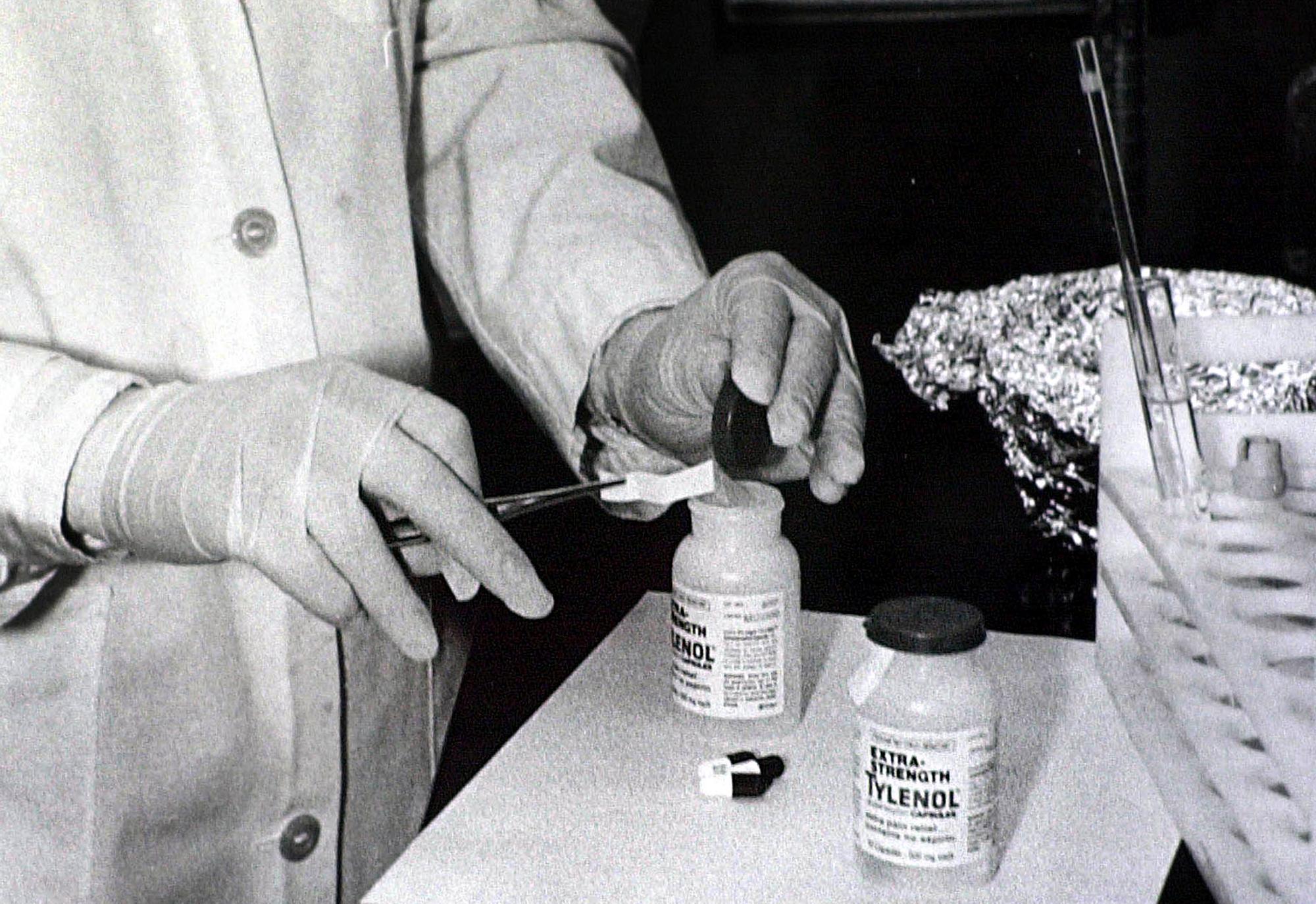
BOISE, Idaho (AP) — A man found dead in an Idaho church decades ago may be connected to unsolved poisonings in 1982 that were dubbed the Tylenol murders and ushered in child safety caps for medicines, authorities announced Wednesday.
Detective Tim Cooper of the Ada County Sheriff’s Office reopened a cold case investigation in 2019 that led authorities to identify Dr. Mathew Francis Betkouski posthumously. He fatally poisoned himself with cyanide more than 40 years ago and was buried anonymously.
Get The Latest News!
Don't miss our top stories and need-to-know news everyday in your inbox.
Once detectives identified Betkouski and began to learn about him, they came to believe he was a possible suspect in the killings of seven people in the Chicago area with cyanide-laced Tylenol, Cooper said.
No one was ever charged in those killings, which triggered a widespread recall of the over-the-counter painkillers.
An engraved key found with the body in the Boise church led investigators to a street in Jacksonville, Florida, where a property owner disappeared in 1982. They used photos and DNA testing to confirm his identity.
Investigators then learned that Betkouski worked in drugstores. Former colleagues and acquaintances said he had a history of volatility, was fascinated by the idea of a “perfect crime” and once said cyanide was a means to kill without detection, authorities said.
Detectives found cyanide in Betkouski’s desk, which Cooper said appeared to be homemade and was a different compound than what was used in the 1982 killings.
Betkouski lived in five states throughout his life but never in Illinois or close to Chicago, according to investigators. Photos showed that Betkouski visited the Chicago area a year before the killings, but it was not clear if he returned the following year.
The Chicago Police Department said in a statement that its detectives have been in contact with Idaho authorities to determine whether their findings are connected to the Tylenol murders investigation, which remains an open cold case. It did not say whether they consider Betkouski a suspect.
Investigators long believed a man named James Lewis was responsible for the killings, though he was never charged. Lewis died in 2023 after serving more than 12 years in prison for sending an extortion note to Johnson & Johnson, the drug's manufacturer at the time, demanding $1 million to “stop the killing.”
When Lewis was arrested in 1982, he gave investigators a detailed account of how the killer might have operated. He always denied involvement, however.