HONG KONG (AP) — China said Monday its economy grew 4.5% in the July-September quarter from a year ago fueled by robust exports, moving closer to meeting its official annual growth target for the year as trading partners seek to balance their trade deficits with the country.
Economic growth accelerated from the 4.3% year-on-year rate recorded in the April-June quarter, the slowest expansion in more than three years. Its economy expanded 4.6% in the first three quarters.
Get The Latest News!
Don't miss our top stories and need-to-know news everyday in your inbox.
For the whole year, Chinese leaders have set a growth target of 4.5% to 5%, down from last year’s 5% expansion. Earlier this month, the International Monetary Fund trimmed its forecast for China’s 2026 economic growth to 4.5%, the lower end of Beijing’s goal.
“Domestic demand was weak, while trade grew strongly,” said Dave Chia, an economist at Moody’s Analytics. Exports will likely stay strong but global trade barriers remain a risk, he said.
China’s domestic demand has been weighed down by a yearslong downturn in its property market.
The headline official growth figure is becoming “an increasingly poor indicator of how the broader economy is performing,” said Max Zenglein, Asia Pacific senior economist at The Conference Board.
That’s because it masks “widening disparities across industries, regions, and households,” Zenglein said. Beijing faces difficult trade-offs and managing domestic imbalances may prove more challenging than dealing with external pressures, he added.
On Monday, Mao Shengyong, deputy head of China’s National Bureau of Statistics, cautioned of the economic challenges ahead. “The international environment is complex and volatile, the problem of insufficient domestic demand remains relatively prominent and the foundation for a stable, improving economy still needs consolidation,” he told a news conference.
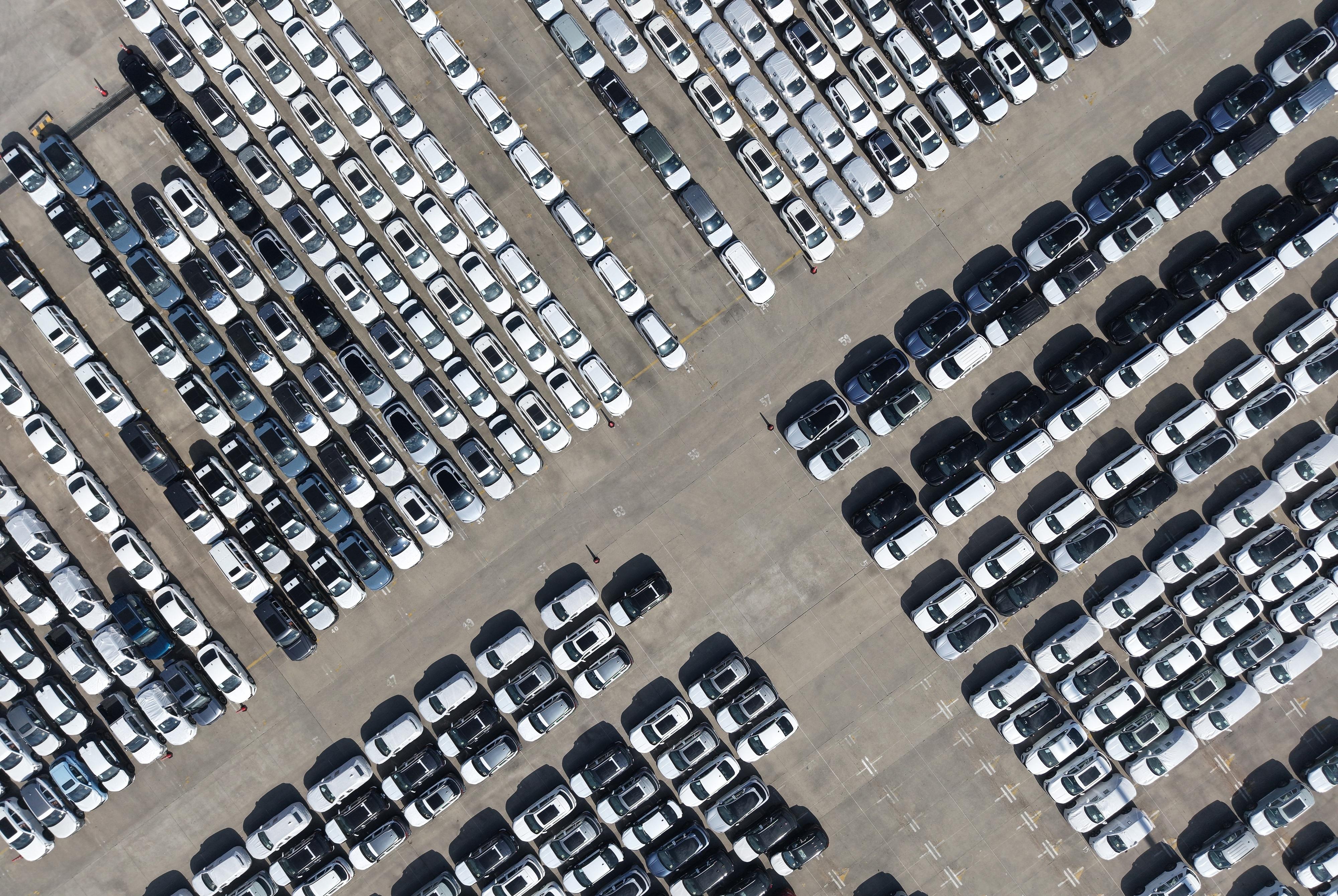
With exports being one of the few bright spots, China is on track to surpass last year’s record $1.2 trillion trade surplus globally, after logging a 36% growth in exports last month and already a $938 billion surplus between January and September.
Elevated U.S. tariffs have hit some U.S.-China bilateral trade and forced China to look elsewhere, including Southeast Asia, Latin America and Europe. High-tech exports such as semiconductors and autos, including hybrid and electric vehicles, are among areas driving its export growth this year.
As China pursues self-sufficiency to help shield itself from Western export controls and trade uncertainties, it has built up massive domestic manufacturing capacities across industries such as solar and EVs, which are heavily subsidized by the government. But output was scaled up rapidly at a time of weakened domestic consumption, so many of these goods are shipped to overseas markets at competitive prices.
An export-reliant growth model that’s highly tech-driven has shown limited job creation and broad income gains while risks of artificial intelligence-driven labor displacements continue to grow, said Ecaterina Bigos, senior market strategist at BNP Paribas Asset Management.
Many trade partners fear their domestic industries and economies face growing threats from lower-cost Chinese manufactured imports.
“It is untenable and unsustainable for the world’s second largest economy to rely on foreign demand to prop up its own growth,” said Eswar Prasad, a professor of economics and trade policy at Cornell University.
Through its persistent and large trade surpluses, China “has become a drag on world growth rather than an engine that pulls the rest of the world along,” Prasad said.
The European Union is among those impatient to reduce its trade imbalance with China. The 27-nation bloc runs a trade deficit with China of more than $1.1 billion a day.
For the first nine months of the year, Chinese exports to the EU were up 16%. EU countries are eyeing more curbs on China after the EU reached an agreement with China this month to roughly halve the number of Chinese hybrid vehicle imports over the next few years.
China can work with other countries on disputes and it wants to keep its market access, said Gary Ng, a senior economist for Asia Pacific at French bank Natixis. With a deal with the EU on hybrid cars, for example, China can likely still sell more made-by-China products in the longer run while avoiding a broad tariff hike.
Even with agreements made between China and the EU, “trade imbalances will be difficult to resolve quickly,” said Lynn Song, chief economist for Greater China at Dutch bank ING.
Policymakers say an undervalued yuan, China’s currency, against the dollar and the euro has contributed to China’s growing trade surplus, even though China’s central bank has dismissed the claims.
“We are likely to see continued resistance, rising protectionism, and persistent pressure from economies globally to protect their industries, and jobs, notably in high value sectors,” noted Bigos.
China insists that it does not seek a large trade surplus. Central bank governor Pan Gongsheng said Friday that countries with trade deficits and those with trade surpluses should work together, and that China, as a responsible country, is committed to expanding domestic demand.