
SEOUL, South Korea (AP) — South Korean director Yeon Sang-ho has built his films around artificial intelligence. His latest, “Paradise Lost,” revisits the theme in a psychological thriller about a mother who spends nine years with an AI version of her missing son — until the real one comes home.
Kim Hyun-joo plays Ryu So-young, whose son, Sun-woo, was abducted on a school camping trip. In her grief, she relies on an AI recreation of the boy, forever 10 years old, seen through augmented reality glasses. When the real Sun-woo, played by Bae Hyeon-seong, returns as a grown stranger, she finds herself torn between the two.
Get The Latest News!
Don't miss our top stories and need-to-know news everyday in your inbox.
The “Train to Busan” director’s earlier AI-themed films include the 2023 Netflix film “JUNG_E” and this year’s zombie thriller “Colony," which premiered at the Cannes Film Festival.
“Paradise Lost” premiered at the Toronto International Film Festival and opens in North American theaters Friday.

The film came from an unexpected source: Yeon’s mother, a homemaker who worked as a cleaner. When she worried how hard writing stories was on her son, Yeon, who never formally studied screenwriting, told her anyone could do it.
She wrote a roughly three-page tale about a mother and son in a village, which eventually became “Paradise Lost,” titled after John Milton’s epic poem about humanity’s expulsion from paradise.
Yeon spoke with The Associated Press about the film, AI’s limits and why Asian filmmakers may be more receptive to it than Hollywood.
This interview has been translated and edited for clarity and brevity.
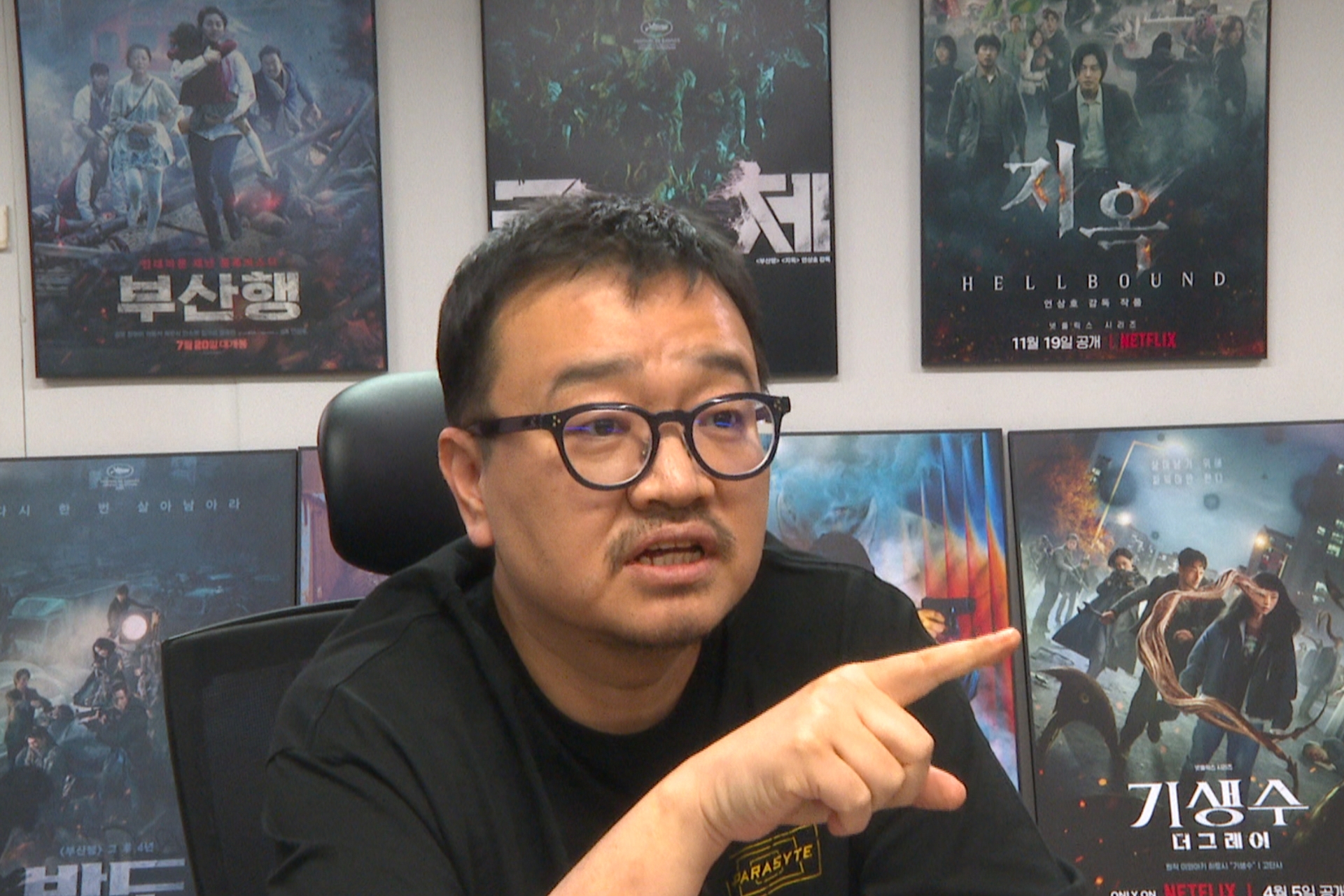
YEON: Relationships, mostly. Continuity in a relationship is key to seeing someone as the same person. AI Sun-woo had filled that role for nine years. But it doesn’t truly contemplate. It gives So-young suitable reactions. Can you call that a relationship? Isn’t real human identity found in relationships with people, even if it's more tragic?
YEON: I see AI as a very sophisticated manifestation of what users want. So when AI Sun-woo cries, I think it’s less his own judgment than something deep inside So-young surfacing.
AI is a manifestation of collective intelligence, so it’s hard to say it’s capable of contemplation. How that might emerge in the distant future, I don’t know. But the way to find out is very simple: If you tell AI to do something and it says, “I don’t want to,” it has started to contemplate. AI doesn’t refuse. My kids flat-out refuse.
As long as contemplation exists, can there be a paradise without pain? If only good things happened, after a week they wouldn’t be good anymore. So I never really understood paradise in Milton’s “Paradise Lost.” I felt something similar looking at AI.
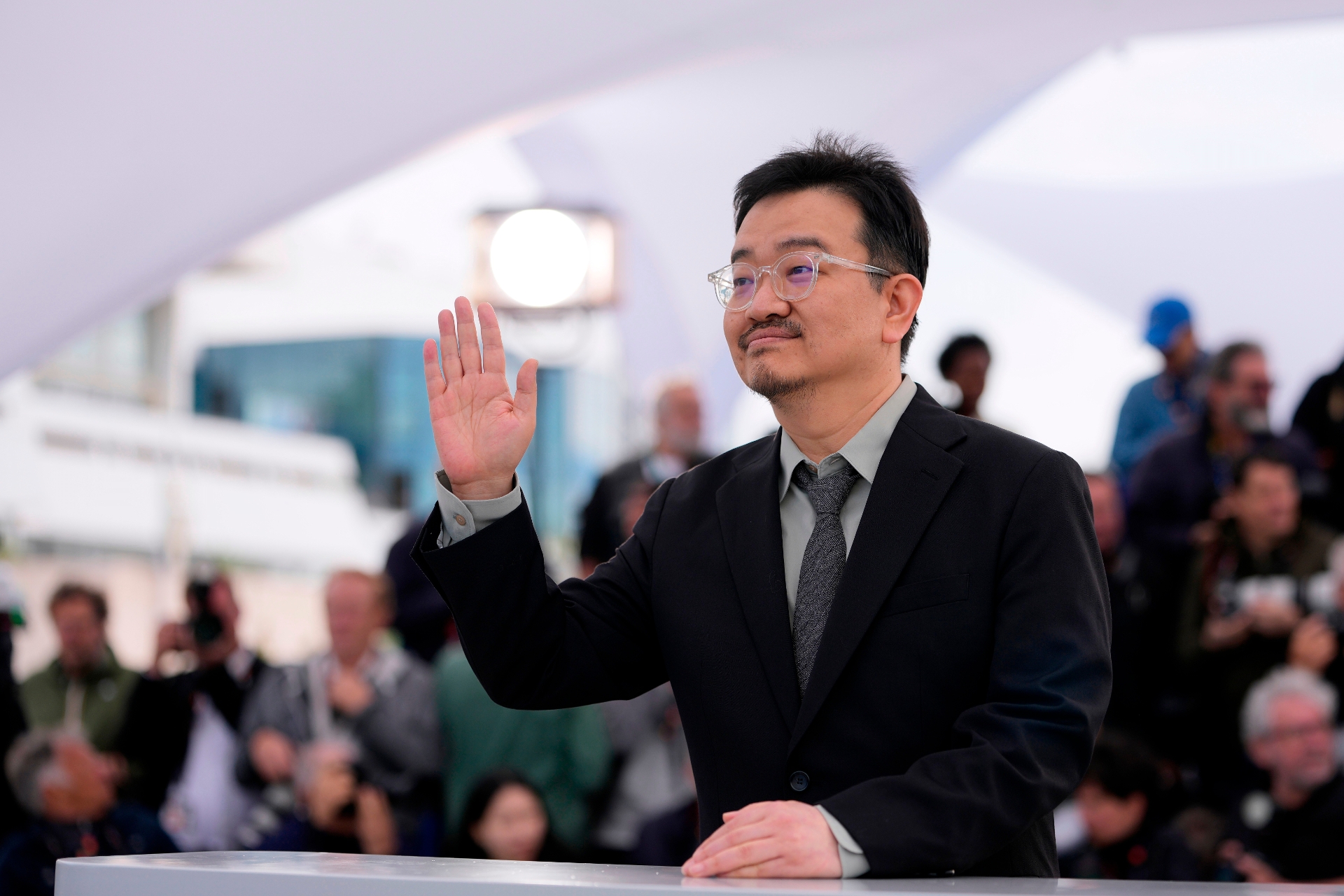
YEON: I feel that way. But “AI” is such a broad term. To avoid AI, you’d have to stop searching; even search engines use it. Some cite data centers’ environmental toll, but how much of that comes from film?
English-language films had a much bigger market and far bigger budgets. Expensive films more or less had to be made for the English-speaking market. That’s crumbling as AI and many other technologies develop, and AI is accelerating it. Asia’s small market kept it from even thinking about making sci-fi. Now Asian film can take on more subjects, so I think it’s more accepting of AI.
YEON: Filmmaking sometimes needs collective intelligence. Before release, we survey 100 people at blind previews. In a way, that’s a collective intelligence test — it works on the same principle as AI.
We’ve turned “AI” into a kind of icon, but look beneath it and the question is how much collective intelligence popular filmmaking needs. I find debates that lump everything under “AI” unproductive. When the question is wrong, there can’t be an answer.