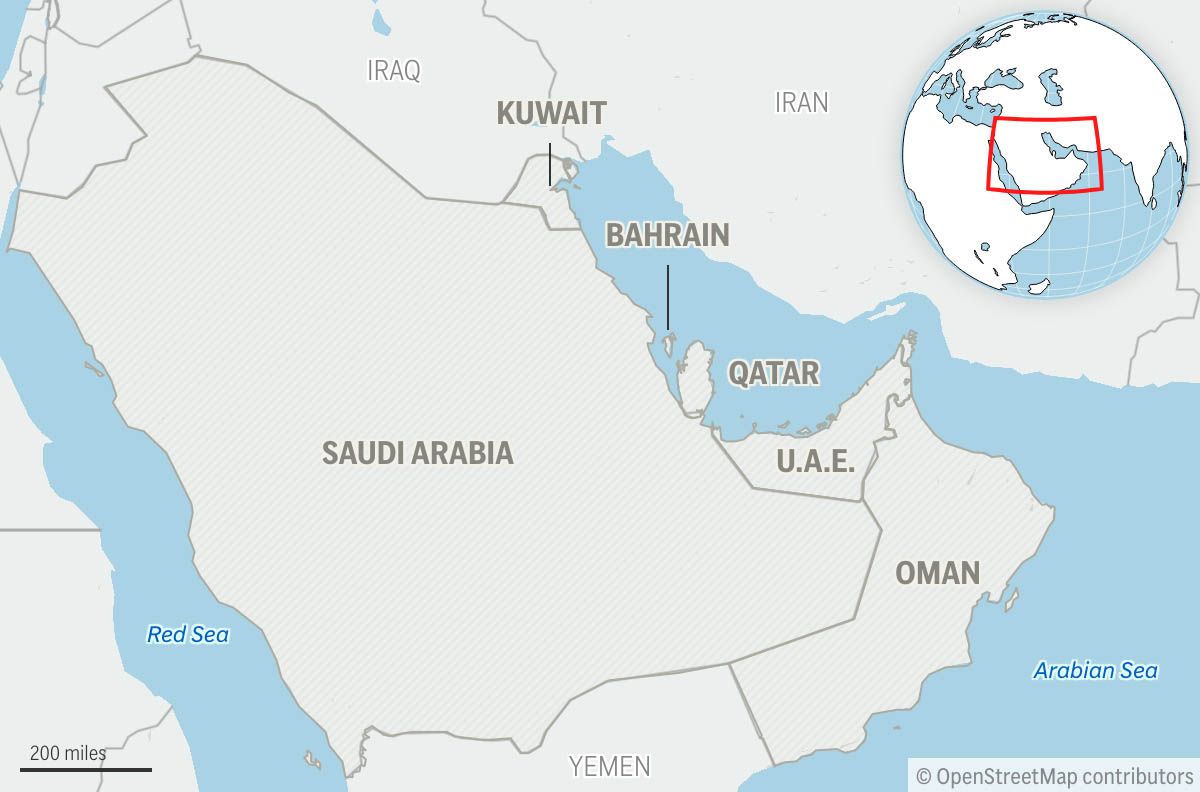
CAIRO (AP) — Iran fired drones across the Persian Gulf on Tuesday at a U.S. radar facility in Bahrain, its third attack in recent days on American military targets in the tiny island kingdom as Tehran resumed strikes on its Arab neighbors after a roughly two-month lull.
After issuing an alert of the incoming fire, Bahrain said that its air defense systems had successfully intercepted the “treacherous Iranian aerial attacks.”
Get The Latest News!
Don't miss our top stories and need-to-know news everyday in your inbox.
The attack came after the U.S. military's Central Command confirmed that the USS Theodore Roosevelt carrier strike group had arrived in the region. The move adds a third aircraft carrier and thousands more troops to the American presence as U.S. President Donald Trump keeps his options open for his next move in the war, which began nearly nine months ago.
The combined U.S. naval assets in the Gulf, Arabian Sea, Red Sea, and Mediterranean now exceed the force deployed when the U.S. and Israel conducted joint strikes on Iran to launch the war on Feb. 28 — the presence provides greater offensive firepower and missile interception capacity, according to a new analysis by Israel's Institute for National Security Studies.
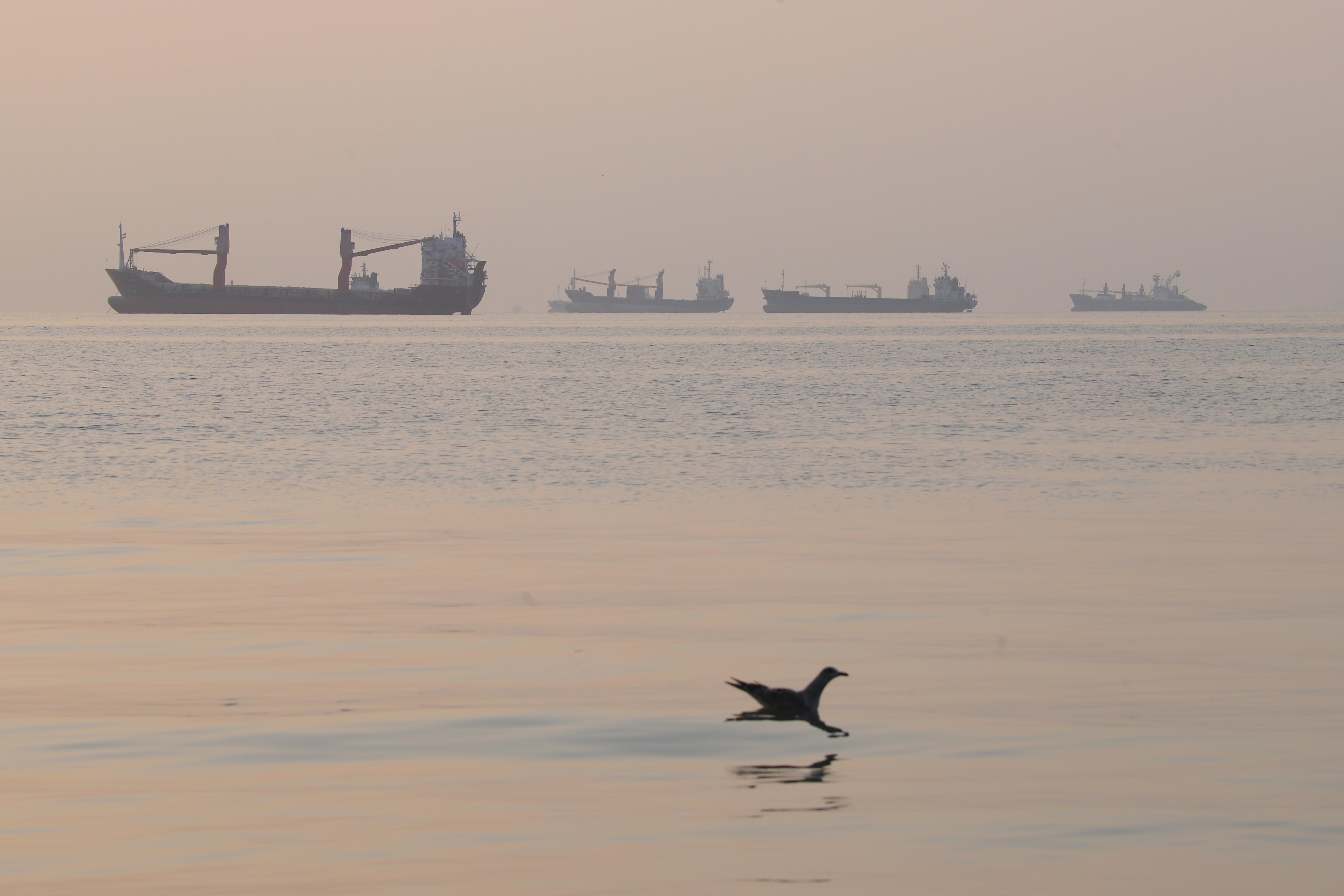
The Roosevelt joins the USS George H.W. Bush and the USS George Washington aircraft carriers, as well as smaller U.S. Navy ships, which are in the region to maintain a blockade of Iranian shipping. U.S. Central Command wouldn't comment on whether it plans to keep all three carrier strike groups in the region or replace the Washington, which had been redeployed from the Asia-Pacific region to relieve the USS Abraham Lincoln amid concerns of its lengthy deployment.
The Washington itself has now been deployed for around six months.
Iran's attack on Bahrain on Tuesday came after it targeted a U.S. early warning radar facility in the country on Friday, and on Sunday fired at a radar system at an American helicopter base there. Despite claims of success, there appeared to be little or no damage done.
The attacks followed U.S. strikes on Iranian communications towers and ongoing drone surveillance operations, and Iran said that they were done in retaliation.
“Continued aggression against the country's airspace, as well as the use of regional military bases and facilities for hostile acts against Iran will not go unanswered,” Iran's Revolutionary Guard Corps said in a statement.
The U.S. military didn't immediately respond to a request for comment on the recent attacks.
With negotiations stagnating on bringing an end to the war, despite intensified mediation efforts from Qatar, the latest military developments have further complicated prospects for a negotiated settlement, said Hamidreza Azizi, senior Iran analyst at the International Crisis Group think tank, in an analysis posted to X.
As the U.S. mulls whether to resume all-out military attacks on Iran or to intensify its blockade to further sap strength from Iran's economy, Iranian leaders will also now be weighing whether “breaking the blockade through escalation is less costly than accepting its continuation,” Azizi wrote.
“In other words, the risk of renewed war no longer depends solely on whether Trump decides to attack Iran again,” he said. “It also depends on whether Tehran concludes that the costs of continued restraint have become greater than the risks of escalation.”
The attacks on the American facilities in Bahrain are a sign that Tehran is growing impatient with the waiting game as its economic woes mount, said Sascha Bruchmann, a Bahrain-based defense analyst with the International Institute for Strategic Studies.
“Shooting at ships causes fear, but is not effective enough to change the strategic equation,” Bruchmann told The Associated Press. “Tehran knows it needs to do something, but I wouldn’t overestimate what we saw against Bahrain this week. This is not it — yet.”
Iranian officials have termed the current situation “no war, no peace” and vowed that it must be brought to an end.
Tehran has said that it's open to a negotiated deal, but also signaled a readiness to escalate the conflict in the face of tightening sanctions and the blockade that are throttling Iran’s economy.
In an interview with Al Jazeera published last week, Iran’s parliamentary Speaker Mohammad Bagher Qalibaf, who has played a key role in talks with the U.S., said that Iran wouldn’t tolerate “erosive behavior” from the U.S., and that Iran aimed to establish a “sustainable deterrence” against further attacks.
___
David Rising reported from Bangkok. Sam Metz contributed to this story from Jerusalem.